A movie a day keeps the doctor away. Or at least that is the colourful lie that I have told myself.
Showing posts with label horror. Show all posts
Friday, October 26, 2018
REVIEW: The Babadook
Chances are that you may have never heard of this movie, and, if that's the case, you really need to do yourself a favour and view The Babadook. This Australian film, written and directed by debuting filmmaker Jennifer Kent, made most of its money in the foreign film scene, grossing just shy of $1 million in North America. However, just because people didn't flock out to see it doesn't mean that this movie isn't an undeniable horror classic. I would easily put it in the top ten horrors from the last decade, and if someone proclaimed that it was a top ten horror movie of all time, they would be justified in saying so. Heck, if I heard a person say this is actually the best horror movie ever made, I don't know how I would be able to go about arguing against that.
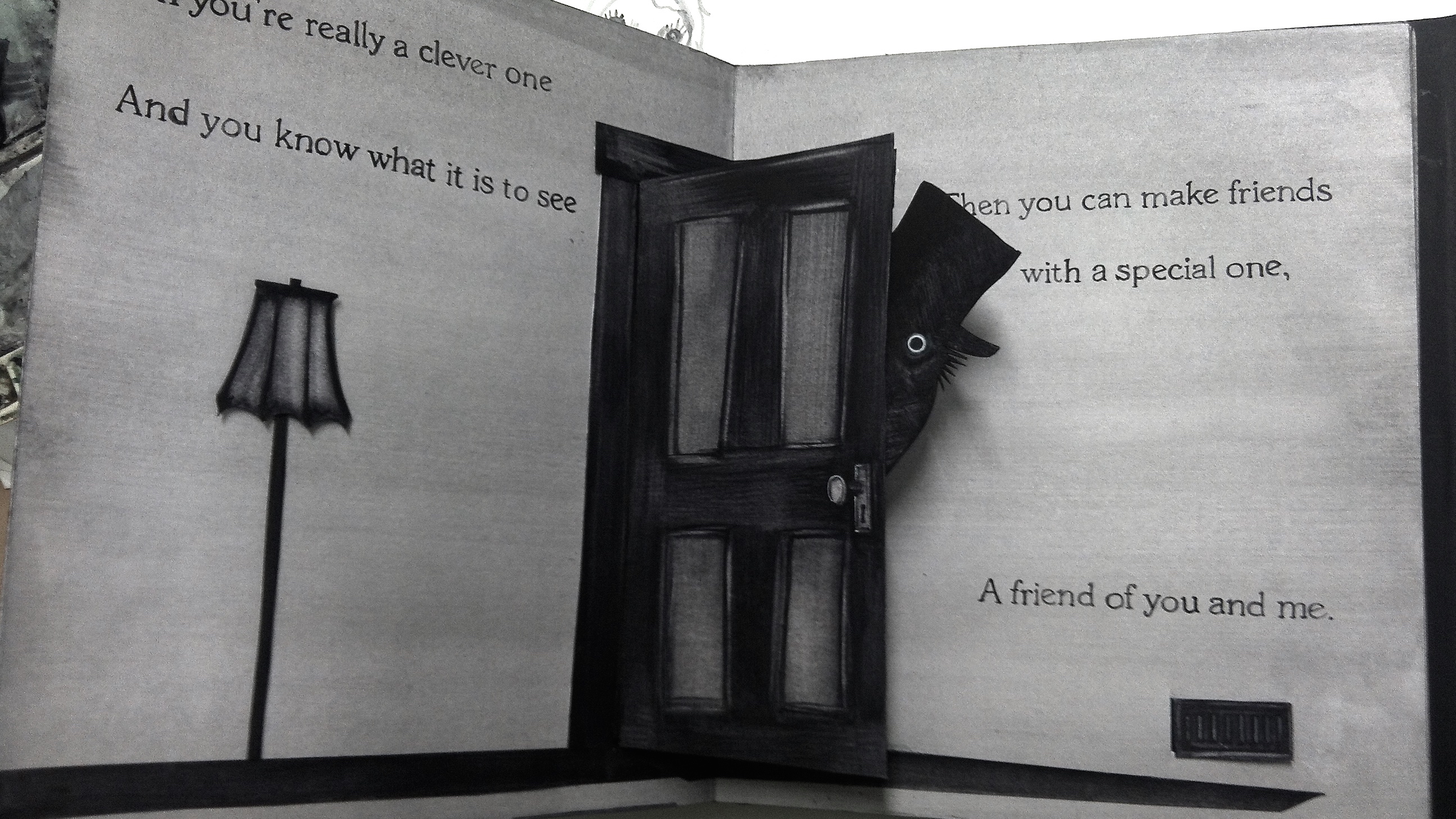
Watching it yesterday for the fourth time, it does not diminish at all. It is just as impactful in what Jennifer Kent is saying about human nature, and the emotional impact of the story hits just as heavy. The story is about a widowed mother, Amelia (Essie Davis), trying to take care of her son, Samuel (Noah Wiseman), who constantly acts out. The toll that her son's behaviour takes on Amelia is devastating, with her emotional fragility bringing her close to collapse. One night Samuel brings his mother a bedtime book to read. It's cover is simple, red with the words 'The Babadook' and a back silhouette of a creepy being. The book begins curious enough, but then turns from lightly disturbing to flat out dark.
Samuel, who has always believed there are monsters in the house, now cannot stop talking about The Babadook, which constantly occupies his mind and affects his behaviour. It is just another incident that Amelia has to deal with, and, by this point, there is just no more energy to handle it properly. Not only that, but soon enough she comes to have her own encounters with The Babadook. From there, reality distorts itself, and her small family is in jeopardy.
The beauty of this script from Kent is the fact that the monster is merely symbolic. The Babadook isn't just a horror, but an allegory for what happens when we don't deal with grief and loss. Amelia has not been able to let go and move on from the death of her husband seven years prior, and the collapse of her family and personal mental health is solely because of her intense suffering. The monster can only be overcome when she reclaims her life, choosing to care for her son in the present instead of living emotionally in the past. Kent makes an interesting point here in that coming to this point doesn't vanquish The Babadook. Those things, she seems to say, will never leave us, and that is okay. Dealing with grief doesn't mean forgetting, but rather keeping that monster close by and managing it.
The stresses of Amelia are heartbreaking, and Kent makes sure to portray that there is no aspect of her life that she has all to herself. Everything is invaded either by The Babadook or her son. The relationship with her son seems to be a bit hyperbolic to illustrate that Samuel's health and development is directly connected to how Amelia interacts with the past and the loss of her husband who died while driving her to the hospital when she was giving birth to Samuel. In a way, she hates Samuel because of this. Even with that baggage, Kent continually shows us that Amelia knows her duty to her son and that she does want to properly love him.
This is a weighty script, with many different aspects that could be explored for their significance. One technique used by Kent is to use a grey filter throughout, making life appear without vibrance and hope. That visual also makes what we see in the film line up with the black and white pages of The Babadook book. What is interesting is that she never reveals true colours, even after the resolution at the end, perhaps another way of stating that the past will always still be with us.
With all of its interesting complexities, I need to draw attention to something about this film that you need to know. Yes, it's dramatic, and hopefully what I have written about gets some interest flowing. However, this is still a horror movie, and it is absolutely terrifying. Jennifer Kent wraps her message up in a vessel that both unnerves and scares the audience, using pacing techniques, environment, atmosphere, visuals, and audio to rattle the viewer. I have seen countless horror films and can see a scare coming a mile away. Not only was I frightened when I first saw it three and a half years ago, but I was still affected on my fourth viewing. That is something special. To be able to have that continued impact on a repeat viewer almost never happens.
Quality horror films are becoming more plentiful these days, and I believe a lot of that success is coming off of the back of movies like this. Well, there really aren't other movies like this. Kent uses all of the techniques of a horror in a way that doesn't feel redundant, and applies elements only when needed. There isn't anything superfluous in the entire movie. For that reason, it is a modern work of art. When you throw in the symbolism of what the monster represents and the journey that the protagonist must undertake you have a film that sticks with everyone who encounters it. The Babadook, I believe, has opened the door for horrors to once again focus on themes. You may not have heard about it, but this is a timeless work that is one of the very best that cinema has ever seen.
Rating - 4 out of 4 stars
Thursday, October 25, 2018
REVIEW: Conjuring
Director James Wan made a name for himself with the low-budget, high concept horror film, Saw, a movie that kicked off a massive franchise. From there, Wan teamed up with Saw scriptwriter Leigh Whannell (who has grown into a very talented director as well) in a movie that I couldn't stand called Dead Silence. From there it was Insidious, a second hugely popular franchise created by Wan and Whannell. In 2013, Wan worked with different writers, Chad and Carey Hayes, on a 'based on real life' film, The Conjuring. The resultant product nailed it with both critics (86% on Rotten Tomatoes) and fans, making $320 million world wide on a budget of just $20 million.
Landmark movies are easy to spot, whether you like them or not. I saw Paranormal Activity in theatres, and, as much as I didn't enjoy it, it was undeniable that the audience was enraptured and that movies would be changed going forward. Seeing The Conjuring in theatres, the audience experience was so different. While in Paranormal Activity the scenes only were constructed to lead to a moment that would make the audience jump, The Conjuring gripped people in a different way. It was through old school story telling that viewers were being immersed. This appreciation was echoed in the box office. Paranormal Activity, the financial juggernaut of a franchise, tallied up $890 million world wide from six movies. The 'shared universe' that was created from The Conjuring has racked up $1.5 billion from five movies.
What I would pick as Wan's greatest strength is the fact that you can easily tell that he learns from his movies and works to tighten elements up and further explore compelling ideas. When he got to The Conjuring, as mentioned above, there was a sense of old school story telling, something that was quite fresh in a time of the poorly premised found footage films that were all over the place. A downside to calling on the old school was the fact that there is a scene at the beginning of the movie when a family is moving into an old house where the dog refuses to enter. Mild spoiler, but the moment a horror fan saw that scene they knew that the dog would later be found dead, probably by a young child that would scream. Other tropes include a child talking to an invisible ghost that wants to be their friend and a haunted trinket. At least there are no birds flying into things without explanation. Oh, wait...
The story is about a family with five kids that find themselves living in a haunted house. Lili Taylor plays the mother, Carolyn, and Ron Livingston plays the father, Roger. In an attempt to find relief from the pestering of the dark spirit, real life paranormal investigators Lorraine and Ed Warren are called upon. Take these people with a big ol' grain of pink Himalayan salt, as they 'investigated' the famous Amityville house and said it was truly haunted, even though it came out that it was nothing but a hoax devised over wine.
However, be them snake oil salespeople or not, Wan and the Hayes siblings are smart enough to know that these characters are going to be key in how the audience accepts the movie as a whole. There are scares, but then there is also the art of making everything mean something as an entire package. Paranormal Activity made the entire audience jump, but, from the people I have talked to, it failed to make them really connect with the story. Wan knows that the Warrens are important, and he crafts them as people who are likeable, who care deeply about others, but who also have learned that there is a line in the sand (sorry for the cliche) that they can no longer cross. This is the backbone of the film, as they desire to help, but the repercussions could be massive. All of this is developed even more-so in the The Conjuring 2, which I feel is a much stronger movie.
Playing the Warrens are the incredible Vera Farmiga and Patrick Wilson. It is clear that they really care about the characters they are portraying, and they slip into their skin with finesse and ease. They are relatable, and it is easy to feel the impact of the decisions they must make. The casting here is so brilliant, giving a grounded connection to the audience.
It is because there is an actual story to care about that makes The Conjuring really stand out from others of its time. There were so many atrocious movies that really didn't care about their overall stories, much less their leads. Things aren't necessarily deep and reflective in this film, but it just goes to show the difference that caring about the entire product can do.
The Conjuring really felt like James Wan's scariest film when it came out. As I said, it is clear that he grows and learns from each project, and the spoils of that culminate in The Conjuring (and even much more in the sequel). In the film, we do have some jump scares, but there are also many moments where it is all about the build and the atmosphere. The house itself is a character, and not utilizing the location is a fault more common than you would imagine.
This was supposed to be Wan's final horror. He had moved on to direct the box office Goliath Furious Seven, but he couldn't stay away for long. It is clear that this is in his blood, and it is something that he is undeniably successful at. How many other directors have created three mega hit franchises? Those franchises alone, forgetting the $1.5 billion from Wan's Furious Seven, have made over $3 billion. James Wan knows how to connect with audiences, and I couldn't be more excited about his upcoming Aquaman. I know that movie's going to do well.
You may look at my rating of three stars for this movie and think that it shouldn't be considered a classic. The Conjuring gave us something to care about in a time when story telling was beyond secondary to jump scares. It used atmosphere, and it reminded audiences that there was so much more to the movie experience. It could never be said that it didn't leave a massive impact on the entire horror landscape. It isn't deep, it isn't insightful, but it is joyous fun, and the mark that it left on popular cinema was a positive one.
Rating - 3 out of 4 stars
Wednesday, October 24, 2018
REVIEW: The Cabin in the Woods
In April of 2012 a movie entered theatres without me really knowing much about it, but it didn't take long to understand that there was an incredible buzz surrounding it after its opening weekend. I overheard many a conversation about The Cabin in the Woods, with people signing high praise. I didn't see it, and then forgot all about it until a friend intervened in my life and set me straight by getting me to view this film.
The movie follows five college students who head out for a weekend excursion to the new vacation home of a cousin. Their destination turns out to be a very run down and old cabin in the woods (hey, isn't that the title?). It doesn't take long before everything to turn into a mess as they find themselves trying to have to survive against ghoulish creatures. However, it turns out there is much more to the equation.
I cannot say much more about the plot. It is incredibly unique, and brings an entirely new premise to what would be an over-done story. While it would be an enjoyable film for almost who would watch such a movie, it is true horror fans that will get the most from The Cabin in the Woods. Script writers Joss Whedon and Drew Godard (who also directed it) insert so many brilliant easter eggs as they play on dozens of tropes of the genre. The greater your knowledge of horror and its history, the more you will get out of this film. This is something that is made by fans for fans, while taking genre staples to new levels.
The casting of the film is really well done, with everyone involved hitting every note they need to. Dana is out main character, played by Kristen Connolly who would most likely be known for being in television shows As The World Turns and House of Cards. Anna Hutchinson plays Dana's friend Jules, with her boyfriend Curt played by Chris Hemsworth (an actor who doesn't seem to get enough recognition for his diverse talents). New to the group is Holden (Jessie Williams from Grey's Anatomy), who is a possible hook-up for Dana. And, of course, there is a stoner. Marty is played by Fran Kranz, a character that enjoys spending time with a bong. A pot head is used in many horror movies, and that is the reason for this character. The fun part of the film is that it plays with the other four from the group to hit on the other character types that seem to be in ninety five percent of slashers.
Humour is abundant, with the character of Marty doing most of the heavy lifting. I can't say what their roles in the film is, but the brilliant duo of Hadley (Bradley Whitford) and Sitterson (Richard Jenkins) bring continuous entertainment and joy to the viewer. You may not be familiar with their names, but if you saw either of these incredible actors I'm sure you would recognize them. They are both on fire each scene they are in, and, after seeing this, I can't help but wish they were both in mainstream stuff more often.
Because this is a horror film, be it even a self aware and comical film (it takes the self awareness from movies like Scream to an entirely new level), there are villains, kills, and blood. Drew Goddard may not be able to get the same sort of suspense that a straightforward horror could mine, but that doesn't stop him from making intense scenes that are well paced and entertaining. I should warn people that there is some gore in here and more blood than I could think possible.
Apparently, Goddard and Whedon wrote this script in just a few days and part of the purpose was to make a commentary on the rising sub-genre referred to as 'torture porn.' Director Eli Roth's film Hostel was one of the early examples, followed by Saw (which is viewed as torture porn, but the original film had very little of that in it). Many people have disdain for torture porn, as in many cases the only reason for these movies is to show people getting subjected to brutal acts. When the full concept of the film is revealed, it is quite interesting just how Goddard and Whedon addressed the issue.
With a rumoured budget of $30 million, The Cabin in the Woods didn't set the box office on fire, as it only took in $66 million world wide. When it comes to classic movies, however, financials seldom tell the true story of their impact. With The Cabin in the Woods there is a film that absolutely tickled the fancies of critics (it is at 91% on Rotten Tomatoes) and genre fans alike. With certain types of film, especially genres like horror and science fiction, there are movies that fans will hold on tightly to, even if they are forgotten by the world a year after their release. The Cabin in the Woods is a movie that will be continually making the rounds in horror circles for years, and probably decades, to come. It may be a horror without legitimate scares, but it is the smarts behind it, as well as the execution, that solidify The Cabin in the Woods as a horror classic.
Rating - 3.5 out of 4 stars
Monday, June 13, 2016
Thank The Paranormal Activity
Taking a look at the state of horror at the time Paranormal Activity achieved mass distribution, there was a lot of attention being paid in the horror industry to bring life back into the big named slashers that dominated the 1970s and 80s. We had seen lifeless and impotent reincarnations of Friday the 13th, Texas Chainsaw Massacre, Halloween, and A Nightmare on Elm Street was a year away from thudding into theatres. There was no lustre to the horror scene. It was just attempts by studios to hold onto the past, believing that the slasher sub-genre was the way forward for fans.
How wrong they were.
Priced with a budget of only fifteen thousand dollars, Paranormal Activity hit the screens in 2009 and became a phenomenon. It took in over one hundred million domestically, and another eighty five million from foreign markets. Regardless of what I think of the quality of the film, it showed that there was something that movie goers were craving, and it did not have to do with nostalgia and stories from yesteryear.
The initial impact was felt right away, with a glut of cheap, found footage films. This, however, is not the true legacy left by Paranormal Activity. Sure, it is the most visible impact, and I may have a lot of people disagreeing with me on this, but the mark it left of movie history was something vastly different. It showed conclusively that budget meant absolutely nothing, and that atmosphere and attention to pacing and tension could bring in the box office numbers.
This was not the first film to hit the low budget, big numbers benchmark for horrors. In 1999, The Blair Witch Project introduced found footage to the masses and was a low budget success. It had an immediate impact on films, but its impact was felt in the independent market, with its doppelgängers never seeing the cinema. And then in 2004, James Wan's Saw raked in just over one hundred million world wide. It fell in nicely with the established slasher attempts of the day, so it is less of an anomaly.
With Paranormal Activity, it's successful notes were noticed by its producer, Jason Blum. Blum realized that it was not the fact that it was the gimmick of found footage that made it successful, something that many people equated with it, but rather the fact that a managed budget could mean success for a film whether it found its way to nationwide distribution or simply video on demand and streaming services.
This is what makes Blum a visionary. Throw stones at me if you will for calling him a visionary, but this is exactly the word that one should use when describing him. The success of the Paranormal Activity franchise brought him into the game, being able to wield money and not throwing it out in big chunks looking for the next big thing. Instead, he stuck to the same financial formula that made Paranormal a success.
At first, the films that were coming from him were similar in feel as they focused around hauntings and possession, the rising fad that horror was undergoing. But, it was his unwillingness to deviate from the movie making formula that led him to being able to branch out and begin producing different types of low budget films. While the competition was still looking back at Paranormal Activity, Blum was looking forward and allowing directors with new and interesting stories an opportunity to get their ideas out there.
The biggest step forward for Blum and his production company, Blumhouse Productions, was with 2013's The Purge. It showed that his formula could be completely separate from hauntings and the supernatural and still maintain success. This is the forward thinking that I had referenced. He knew that it was not just about recreating the same films in different formats, but by taking fresh ideas and bringing them out by keeping the budgets in check. Made for a budget of three million, The Purge brought in eighty nine million worldwide. Its successor, The Purge: Anarchy, had a slightly higher budget of nine million, but took in one hundred and eleven million across the planet.
While horror was the main financial driver for his production company, it allowed for a massive variety of films to be made. From a suspense in The Creep when he teamed up with Mark Duplass, to giving actor Joel Egerton a chance to direct The Gift, to producing the Oscar nominated Whiplash, there was a great deal of diversity coming out of Blumhouse Productions. He even provided a fresh ground to down and out director M. Night Shyamalan with a great come back movie in The Visit.
Without Jason Blum understanding the correct lessons learned from Paranormal Activity, horror would be in a much different place today. He could have easily stuck with keeping to the same story format, believing that the success lay there, but he thought bigger. He believed in high concept stories with low budgets, giving the creators freedom to create. Just like the found footage success took a few years to be really felt in mainstream cinema, Blum's true formula took a while for others to understand and emulate.
Without Jason Blum, would The Shallows be getting nationwide distribution? Would James Wan's The Conjuring and its sequel have gotten the distribution support that it received? Would It Follows have been the modest hit that it was? I could go on and on, but that would just become boring reading. The important thing to focus is the fact that Blum's ability to take chances on films because of keeping the budgets low while allowing creative freedom has brought many wonderful horrors, suspenses, and thrillers to audiences, either directly or indirectly thanks to Jason Blum.
Friday, June 10, 2016
REVIEW: The Conjuring 2
I will start this by saying that I enjoyed the first Conjuring. It should be taken with a grain of salt, though. It was a decent horror film that ended up switching tones and going for the ultimate in chaotic once the third act came around. Director James Wan said it was his last horror film, but ultimately he could not stay away and returned for this summer's sequel. If what we have been given in 2016 in the way of sequels is a trend, it would be believed that The Conjuring 2 would be without soul and just a reason to put out a film with a recognizable name.
Luckily, however, there is plenty of heart and soul to be found in this paranormal caper. It follows the ghost investigating husband and wife team of Ed (Patrick Wilson) and Lorraine Warren (Vera Farmiga) as they come off the case of the Amityville haunting. This is based off of actual people, and there was an actual Amityville case, but, truth be told, it was one giant hoax. That doesn't stop it, and the fictional house that symbolized it in the 1977 film, from being used in cinematic tales of ghosts to this day. After investigating the case at Amityville they decide to hang up the gloves, only to be drawn in one last time, heading to London to deal with a family that has been tormented by an evil spirit.
Wilson and Farmiga reprise their roles in terrific fashion, with a true chemistry between the two. In a way, this is a story about their love for each other as much as it is about the case of the haunted house. We get enough back story into their relationship to understand both their caring and concerns for each other. Solid relationships that the audience can believe in are paramount to every film, and The Conjuring 2 manages to pull this one off.
Knowing the current state of haunted house horror films, it is easy to go into this movie and believe that everything will be solely about the jump scares. The first Conjuring laid heavy on them, but Wan showed a crafty ability to keep them from being too predictable. This time around they are a little easier to anticipate, but there is a greater detail paid to the atmosphere and the story.
The first half of the film builds on the tension of these jump scares that the Hodgson family is dealing with. Poor folks can't get a decent night's sleep without jumping at a scare. There were audience members who were jumping as well, but, as mentioned, they were easily spotted. Once the movie entered the halfway mark, it was less about this and more about the narrative, turning it from a startling horror into more of a thriller. In a number of ways, this format was similar to Insidious Chapter 3, which turned out to be a very fun ride.
Paying more attention to the characters and the story elevates The Conjuring 2 above what my expectations were. We are treated to a well cast company of actors, anchored by the young Madison Wolfe who plays a child who is most afflicted by the paranormal baddy. There are four people with screenplay credits, which can usually mean a film feels disjointed along the way. Not so here, as it is competent for being a summer horror film.
Keeping it from being great is the aforementioned predictability of the scares. But for those who have not seen nearly as many horror films as I, it should still prove to be frightful. The characters are great, the relationships are believable, and Wan shows his slickness with the camera attention to set details. There are so many failed sequels this year, but The Conjuring 2 does not rank among them.
Rating - 3 out of 4 stars
Saturday, February 27, 2016
REVIEW: The Witch
Be ye willing to lend ear to old English? I pray thee, that thine do be just and willing to do so, so that ye shall harvest thine fruit of enchantment and fear from The Witch. I am rubbish at pretending to have the skills to use a dated tongue, but the scriptwriter for The Witch (Robert Eggers, who also directed it) nails it perfectly. I bring up the dialogue style because I know that it has been the source of some confusion for some movie goers. It takes an attentive ear to follow the conversations in the film, and it takes an equal amount of patience. However, if you are able and willing to work through that you are in for the year's best psychological horror film so far.
It is easy to give it that praise based off of two reasons. Reason the first, there have been few decent movies hitting the theatres so far in 2016. Reason the second, it is a really good horror flick. Based in the 1600's, it is about a family that gets exiled from their community after the father has been accused of heresy.
The location of the film is around the farm that they create, roughly a day's ride from the village. They live in isolation, surrounded by the dark woods. It is the perfect place for the imagination to take you for walks through the dark creations of the mind. Robert Eggers makes the most of the stunning isolation, turning it into an incubator for the suspicions and desires of the characters in the film. With this being Eggers' first feature film, he shows an understanding of how to transpose the vision he has onto the screen, making great use of pauses in the film, cinematography, dialogue, and music to create the tension.
The Witch is a definitive slow burn horror. That is not me saying that it is boring or a slog. Not by any means am I inferring that. It is a captivating tale that focuses on the religious leanings of the family and how superstition about witchcraft is granted birth after some very serious instances happen. Eggers uses wonderful pacing to unravel the tale in which a secluded family begins turning on each other over stresses from catastrophe.
Yes, I am being vague about the plot points of this film, but I think it is best if there is very little known going into it. It is all about how it develops and unfolds that feeds the beast of intrigue and suspense. Some things are best experienced first hand.
It would be impossible to write about this review and not to mention the impressive performance for the feature film debuting actress Anya Taylor-Joy. She leads the charge as the main character, the teenage daughter Thomasin, whom the majority of the story revolves around. Anya delivers a well rounded performance that keeps the audience invested emotionally in the tale. She shows through her skills that she will be a talent that is going to be around in films for a long time to come.
The one negative that I can give about this movie is that perhaps it could have ended a few minutes earlier. This is not a comment on the run time, but more about what Eggers chooses to expose in the final moments of the film. Some things are best left to the imagination, and a little too much gets exposed when the rest of the film is a lot more cryptic. I was left with a similar feeling as when I saw The Last Exorcism, a great film that built a lot on mystery and doubt only to show the answer to all of the questions in the final moments.
Let that criticism not be enough to keep you from seeing the film. It is just something that took away the whooshing of the wind in my sails and killed the adrenaline that had been built up over the prior hour and an half. This is a must see for horror fans, but also serves as a good gate-way into the genre. It is a wonderful microcosm of human nature's need to pin reason the the unexplained and the division that can quickly appear when despair is rampant.
Rating - 3.5 out of 4 stars
Tuesday, January 26, 2016
REVIEW: The Boy
I will admit that there is something that is inherently unsettling about porcelain dolls. It seems to be due in part to their unblinking and emotionless eyes, and also in part to the general creepiness about them. There may have been a time and place in this world when they were excepted and cherished, but I personally believe that they have no place in today's society. I have experienced one first hand as I visited someone's house and had one of those devilish little bastards staring me down from across the room as I tried desperately to sleep.
Horrible little things they are. So, what better thing to do with something that embodies creepiness than to make a movie about someone being stuck alone in a mansion with one? And hey, why not make it possessed? That's the basic plot behind The Boy, which is about a young woman, Greta (played by Lauren Cohan) who takes a job nannying a doll to get away from an abusive relationship with a guy who has a horrific American accent (Ben Robson). The doll is treated like a son by an equally creepy older couple who have a meticulous set of rules that must be obeyed to keep the damned doll happy.
This is the point in the review where I sigh. Some movies that go wrong at least have some modicum of potential that is being wasted, but with this film by director William Brent Bell the only platform for it to stand on is that which has already been laid down by previous horror films. In fact, the climatic twist in the movie is straight out of a well received New Zealand horror flick.
It is not that there just isn't anything new here, it is a poor script that never allows the audience to empathize with a character that we should be able to feel for. Poor Greta has had a rough time, but as she makes stupid decisions, such as not leaving the house once she's convinced that the doll is haunted (she also falls in love with it, because that makes sense. Oh, and the 11-ish year old that sat beside me whispered to her mother that Greta was a moron for acting the way she did. If kids spot it, that is a bad sign) we just loathe her decision making process instead of feeling for her.
I suppose that one positive that the film has going for it is that it is shot in a beautiful, old country mansion in Britain. It is the kind of setting that works wonderfully for establishing atmosphere and mood. This magnificent tool that they had on their hands was, however, disserviced by two things. First of all, it was not utilized well by the director or cinematographer. The only times it was set to be creepy turned out to be dreams that Greta was having. Also, we are told that the house burned to the ground twenty years earlier. Apparently the script writer didn't realize that it is difficult to to have a centuries old home that had previously been destroyed.
Lauren Cohan does what she can with the script, and she is a bright spot in the film. It is too bad that the writing and directing don't give her anything appropriate to play off of that would allow us to understand her more and care for whether or not she survives. I was rooting for the damned doll to win, which is not exactly what they were gunning for. Actually, for most of the film I was just begging that the doll would do something. Anything would have been better than it just sitting there and looking creepy.
Rating - 1 out of 4 stars
Sunday, September 13, 2015
The Visit
REVIEW: The Visit
Written and directed by M. Night Shyamalan.
Rating - 3 out of 4 stars
Well, it’s been a while since I have sat at the keyboard and logged into the blog. The absence has been partially due to life circumstances, as well as having an inbred ability to get instantly distracted by my cat, John McClane. He’s badass, which he should be. He drinks his coffee black and takes no prisoners. He recently had to get a hair cut due to the mighty amount of mats that took root in his powerful coat. As great as he is, McClane has an aversion to grooming himself, hence the mats. I wanted to ask the groomer if she was up for giving him a stylized shaving to make it look like he was wearing a tank top, but I figured such a request would get me in trouble from my wife.
Enough about my cat for now. Let’s chat about someone who has been away from the movie scene and considered knocked down from former heights. M. Night Shyamalan caught the eyes of movie goers in 1999 with The Sixth Sense, which elevated his name quickly. In 2002, Signs was another major hit for the director, and he was firmly established as a director whose name alone could be used as a marketing tool.
And then he fell. The warning signs were visible in The Village, where it had by then become obvious that he was determined to have a twist ending in his films. The Lady in the Water, released in 2006, was the first major release of his that lost money. This was also his first major release that was not under Buena Vista, whom he had worked with for four films.
The following years brought three more films from three different studios that were not really welcomed by either critics or the public. It ended in 2013 with After Earth, which was considered by some as a vanity project from the Smith family to showcase the acting dexterity of young Jaden Smith. Whatever the reason for the project, it left Sony with a huge financial loss, and Shyamalan appeared as though he had burned through studios willing to work for him.
Because of his lack of success, major backing for a film did not seem like an option for Shyamalan. What ended up happening was working with micro-budget producer Jason Blum to get a found footage film from pen and paper to cinemas across the world. Universal, who has been the powerhouse studio this year, laughing in the faces of everyone who says you need superhero movies to be successful, got behind the project.
Why am I talking about all of this and not simply reviewing his latest film, The Visit? Well, for two reasons. First off, I love an underdog story. While I may not be a fan of Shyamalan or many of his works, I love rooting for the person his coming back with something to prove. Secondly, I am not going to write a standard review for this movie, but instead examine one major talking point that I took away from it.
I’ll be completely honest about the film and not sugar coat a thing. This is not a perfect movie at all. Saying that it has a twist is not a spoiler. An actual twist to this movie would be if it didn’t have one. There are some ham-fisted moments of people over-coming their fears. The antagonists are a sketch of different ideas of what ‘creepy old folk’ would act like. The camera feels like it is held by a professional camera person and not the characters in the story. This may seem nitpicky of me, but in a found footage film the camera is not an outside eye, it is actually a character.
Speaking of characters, the protagonists instantly turned into idiots in the third act. I was cheering and rooting for them to die. I know that may leave you believing that I am a horrible person for feeling such things, but stupid people don’t deserve to stay alive in the movie world. They are the people who look in the barn after all previous idiots have not returned from investigating. They are the people who investigate things when their lives are in danger. Digital Projection Darwin says they need to be thinned off to enhance the herd, and I agree with him on this one.
I say all of this, and yet I am recommending the movie. The reason why is because M. Night Shyamalan returns to the most basic and yet oft neglected and forgotten foundations that make a successful horror or thriller - characters. We need solid characters who we can feel like we know so we attach to the fear and worry that they experience. I believe that for horrors, the story should be about the characters with tension added in. What happens most of the time is stories of tension with characters forcefully inserted.
At the heart of The Visit are a young sister and brother, Becca (Olivia DeJonge) and Tyler (Ed Oxenbould). They are heading off to visit their mother’s parents, whom they have never met before. Right away I rolled my eyes at both of the children who I knew I would be forced to spend an hour and a half with. They were tropish little ones. Becca spoke like she had been born on the set of Gilmoure Girls, and was the standard teen intellectual. Bring on another straight laced bookworm! Tyler was a thirteen year old who goofed off and wore his pants low. Way to break the mould, Shyamalan.
This is where M. Night wove his magic on me. He took characters who I instantly wanted to discard and made me care for them and love them. When they were done acting like idiots in the third act, I was quick to forgive them for being so dumb. When they emerged from their ham-fisted scenes, I cheered.
This was all achieved because Shyamalan took time with Becca and Tyler. He showed us their true characters, and turned them from cardboard cutouts into individuals who I felt like I actually knew. Even with me feeling a disconnect from the steadiness of the camera (something that rips me out of found footage movies. Seriously, the character should hold the camera. There should be absolutely no camera credits in a found footage film. That’s how it’s done. Just look at Creep, which is also a production under Jason Blum. It is much more organic.), I cared for the little third act dullards.
I believe that if I counted, the issues I had with this film would out-weigh the positives. While Shyamalan was able to set up visually uncomfortable and scary scenes, they felt tacked on afterwards. And then there was the sound. It was which was incredibly well done and intimate, but then was ruined by having a loud noise to coincide with a jump scare. And, the film had a twist that made the characters act stupid.
Sigh, I guess it was a wonderful mess. With all of the faults, it had a solid and heartfelt foundation. The Visit is a solid comeback for M. Night Shyamalan, one where he shows that heart needs to come before scares in a horror. The movie is carried by his attention to Becca and Tyler, as well as the performances of Olivia DeJonge and Ed Oxenbould. And hey, Kathryn Hahn plays their mother, and she is always wonderful. There are many laughs to be found in this film, a bit of eye rolling, and some chilling sequences. When the credits were rolling I was smiling, which meant the ticket price was well worth it
Friday, March 14, 2014
In Fear
Coming out of the United Kingdom, In Fear is a horror film that works to up the level of
claustrophobia and anxiety of the audience by placing us in an all too familiar
fear of being lost. Director Jeremy
Lovering does well to create an environmental stress by placing a young couple
in a labyrinth of wooded, narrow roads in Ireland. As the couple seeks their destination, they
become more and more confused and anxious as they begin to realize that unknown
people are tormenting them while they try to keep their calm and find their way
back out.
The film stars Iain De Caestecker as Tom, and Alice Englert
as Lucy, his girlfriend of only two weeks.
On their way to a weekend festival, Tom surprises Lucy with a night at a
secluded hotel that should provide them some romance to kick off the
weekend. However, as they find
themselves becoming more and more lost their new courtship faces strains and
pressures as Lucy begins feeling quite panicked by the situation. This element of the film was a very neat
addition, as it is easily understandable how it would be hard to try and keep
your own sanity while still dealing with the emotional issues that are arising
in someone who you do not fully know yet, and all under the pressures of a new
relationship.
Another benefit the film had was during the first part of
the movie where there was a lot of mystery surrounding what was happening. There were a few breadcrumbs to follow, but
also enough other plot elements that kept me from being able to settle in on a
conclusion as to the foundation of the situation they were in. Adding to that was the wonderful location
that they found, which provided winding narrow roads that were completely
closed in by the woods around them.
Unfortunately, and as seems to be the case with a lot of
films, the movie just did not seem to be able to keep its momentum through the
second and third acts. The slow subtlety
that it started out with was then replaced with revelations of the situation
that lead to me having a lot of questions about the plot, and not the good type
of questions where there is an unsolvable mystery, but more of logic and the
realm of reality. It came down to the
sorts of issues that are easily brushed off in supernatural horrors or stock
slasher flicks, but this movie does not so much get an exemption from this as
it worked to ground itself as a real world scenario.
As I had mentioned about the ‘bread crumbs,’ which were nice
little tidbits of intrigue at the beginning of the film, they soon became so
big and blatant that there was absolutely no surprise at all when we were given
new facts about the happenings that our couple were plunged into. And, because these clues were so obvious,
they gave a view of the larger picture well ahead of time, which allowed me to
start really scrutinizing just how these people ended up where they were. It became a mess of a convoluted plot that
was so abrasive to the wonderful atmospheric and personal feel that the film
started out with.
Where other films with similar negatives would end up being
a very low rated and forgettable film, In
Fear still provides the audience with some great moments throughout before
it resorts to typical horror scares and scenarios. When the pacing is right in this film, it is
absolutely amazing and a treat to watch.
It is just too bad that it became overshadowed for me by the types of
traps that other films seem so easily to fall into. For a fan of horror films, this is one that
is definitely worth checking out because I am sure you will be able to find a
level of appreciation for this close quarters thriller.
Rating – 2.5 out or 4 stars
|
Credited
cast:
|
|||
|
...
|
Tom
|
||
|
...
|
Lucy
|
||
|
...
|
Max
|
||
Thursday, October 31, 2013
Halloween Horror Podcast
On Monday, my friend Chris posted our weekly podcast on his blog, and the theme of this week's podcast was horror movies on account of it being Halloween. So, if you are wanting some horror overload, click this link to head over to his site to check it out.
We take a look at some non-traditional horror movies to see if there is any gold to be found outside of the mainstream. The truth is, mainstream horror is pretty dismal these days, so our hope was to find out if there was still some good life in the genre. We looked at a few independent movies, and a few international films. Each of the movies are available on Netflix, so it may be a podcast worth checking out if you are a fan of the genre.
The movies we look at are the independent film Resolution, the horror-comedy Teeth, the Australian psychological horror The Snowtown Murders (a film I reviewed on this site), the Australian teen slasher/stylized horror flick The Loved Ones (a film that has made many lists for best horrors), and the very first Israeli horror film Rabies (which I also reviewed on this site).
If any of those may float your boat, give it a listen and maybe you will find a new favourite horror film.
We take a look at some non-traditional horror movies to see if there is any gold to be found outside of the mainstream. The truth is, mainstream horror is pretty dismal these days, so our hope was to find out if there was still some good life in the genre. We looked at a few independent movies, and a few international films. Each of the movies are available on Netflix, so it may be a podcast worth checking out if you are a fan of the genre.
The movies we look at are the independent film Resolution, the horror-comedy Teeth, the Australian psychological horror The Snowtown Murders (a film I reviewed on this site), the Australian teen slasher/stylized horror flick The Loved Ones (a film that has made many lists for best horrors), and the very first Israeli horror film Rabies (which I also reviewed on this site).
If any of those may float your boat, give it a listen and maybe you will find a new favourite horror film.
Scott's Five Favourite Horror Films
It's Halloween today, and I was going to celebrate the sugar-fueled day by doing a horror movie review. It was particularly hard to come up with the right one to do, so I am going to do my five favourite horrors of all time. The thing with 'favourites' are they are not necessarily what you would call the best, but they are what captured your imagination the most. In this case, this list includes three that I would easily put on a list of 'bests' as well. The other thing with lists as such is that they are always shifting and changing as we go through different phases of life. Who knows, next year I may have five different films on this list. Now, it's time for me to dim the lights and point a flashlight up into my face as we get into this spooky list.
5 - 28 Days Later (2002)
This film is about a viral outbreak of a man-made virus that is designed to simulate pure rage. It was designed to put into primates so scientists could find a cure for it and perhaps create a pill that keeps humans from entering fits of rage. A bunch of no-good do-gooders enter the lab to free the chimps, and then starts the outbreak, as the virus is transmitted through fluids such as getting bit by an infected being. Twenty eight days after this event, we see Jim (Cilllian Murphy) wake up from a coma in a deserted hospital, and wandering the empty streets of London which is left in a state that implies a massive disaster has happened. He finally comes across a number of people asleep in a church, only to realize that they have become insane, bloodthirsty maniacs.
Very few films are actually able to instill a sense of uneasiness and fear in me, and 28 Days Later was able to put me, quite literally, on the edge of my seat. It was shot in a very smart style, and director Danny Boyle knew well how to let the environment create tension. The sequence of Cillian Murphy wandering around the ominously empty city of London is an all time classic, and allows the audience to get a feel of the emotions that Jim is going through as the world he knew now ceases to exist. The second half of the movie is quite a transition in tone, as it turns to focus more on the 'safety' that survivors of this event can have living with other survivors, and that perhaps the sane people are in the end more dangerous and deadly than the infected.
The Mark It Left On Cinema - this movie is essentially the reason why zombies have become such a fad lately. It took the genre and modernized it, allowing the concept to be more intriguing in today's world. It now had zombi-ism as a viral disease as opposed to the dead being re-animated and returning to life. It also made it so that zombies no longer just waddled around, but instead sprinted unrelenting towards their target. It is the reason we have The Walking Dead on AMC, and why there was such a big budget zombie movie in World War Z come out during this past summer. It brought life to a dead genre (pun totally intended) and caught the fears and imaginations of film makers and audiences, forever altering the genre.
Rating - 3.5 out of 4 stars
4 - The Blair Witch Project (1999)
Set around the disappearance of three film students, the movie is done in the found footage style, while such movies are a dime a dozen now, this really took the format into the mainstream. It is about students who are filming a documentary on the local mythologies of a haunted woods near Burkittsville, Maryland and end up getting lost in the woods. The movie focuses on their frictions with each other over the situation, but also their personal journeys into weakened states of sanity. Each night they become the victims of a psychologically tormenting actions, and are unable to determine who their tormentors are or what their motives could be.
The beauty of this film is that it shows very little, and I am always a big fan of movies that give the audience enough credit to be able let their imaginations fill in the gaps. We get little bits and pieces here and there, with no real answer as to what is happening. The scenes are brief, but completely effective, as this movie left a lasting impression on me and came back to haunt me whenever I was sleeping in a tent. The end of the film (which may not stand up to today's standards of needing jump scares) was a dreadful, frantic, and riveting experience in the theatre. If one paid close attention to the different local mythologies being explained at the beginning of the film, the very last image is one that will stay with you for a long time.
The Mark It Left On Cinema - The Blair Witch Project left two huge imprints on the cinematic landscape. First of all, it popularized the found footage style. The full effects of it were not felt right away, but a few years afterward with movies such as Paranormal Activity, Quarantine, and Cloverfield. It also set a blueprint for a low-budget/high grossing model that is being successfully used by many people, most notably Blumhouse Productions (Insidious, Paranormal Activity), who extensively use this format to achieve an almost unrivaled profit to expense ratio. Sadly, it would have been great if the impact that it left was the 'less is more' philosophy when it comes to scary visuals.
Rating - 4 out of 4 stars
3 - Alien (1979)
In space no one can hear you scream. That is quite true for the crew of the Nostromo, a deep space freighter that comes across a transmission of unknown origin and wakes the crew from their slumber to investigate, as part of a clause in their contract. The crew of frieght haulers is forced to investigate the source of the transmission or else they basically forfeit their shares. What they find on the surface of the planet with the signal is a crashed space ship, and inside a cavern of organic sacks, one of which opens and lets out an organism that attaches itself to the face of one of the exploring, blue collar crew. When he is brought back to the ship, a gruesome discovery is made - the organism had implanted an embreo inside him, and eventually, birthed out of his stomach in an iconic scene, is the alien. The crew knows that they must capture this creature, but that endeavour starts to prove fruitless as the alien starts to hunt the members of the Nostromo.
When Ridley Scott made this film, patience was the driving force of the film. It is an incredibly slow build, with no aspect of the movie being rushed. We see extensive footage of the ship's interior, which allows us to start to create it as a real space in our minds, connecting us with the claustrophobic terror that is unravelling. The creature itself is something that we do not get good glimpses of until the end, but it's presence is teased with and tracked with motion trackers that give sporadic beeps at the creature's presence, and that allows the scenes to be completely enveloped with the tension, as neither the characters or audience actually knows where the creature is.
The Mark It Left On Cinema - This is one where I could write for days and days about. It was such an immersive environment that was created that so many people caught the bug, and influences can be seen in all sorts of movies. The creature itself became very iconic and has influenced many other alien creations. The sequel, Aliens, continued the influence with the addition of the futuristic military which set almost a template for the look of the marine of the future. Video games such as Halo and Star Craft took a lot of their concepts from the Alien franchise. Sigourney Weaver's character, Ellen Ripley, has also become a bit of an archetype for a strong female who rises to the occasion.
The left is Sargent Johnson from Halo and on the right is Sargent Apone from Aliens
Rating - 4 out of 4 stars
2 - Jaws (1975)
It is summer on Amity Island, and that means tourists, and that means tourist dollars. Unfortunately for the mayor of the small town, there is also a deadly great white shark patrolling the waters, looking for its next meal. Newly appointed police chief, Martin Brody (Roy Scheider) starts to piece together the death of a swimmer as a shark attack, but that would scare away tourists and their dollars (Amity has a very business oriented mayor). The attacks continue, and Brody calls in a marine biologist from the mainland, Hooper (Richard Dreyfus) who tries to help Brody in the efforts to gain control of the situation. Ultimately, the community resorts to hiring Quint (Robert Shaw), a surly bastard of the sea, if ever there was one. He promises that he can bring the fish in, but reluctantly has to accept both Brody and Hooper as crew mates as they head out to find the killer shark.
We seem to gravitate towards having a fear of the unknown, and the brilliance of this movie is the unknown that circles beneath us as we are vulnerably swimming in the ocean. Teeth appearing from the depths was the emotional hook that Spielberg used as a means for our unease and tension, and kept the tone unbalanced as nobody was safe from the appetite of the shark (it happily swallowed both dogs and children). This was not the core of the movie, though. We also had a great adventure and journey that Brody, Hooper, and Quint went on that brought about the sense of the unknown and the danger and isolation at sea. This movie is the ultimate proof that you can make a horror movie with a story so good that it transcends the genre to the point that many people forget that it actually is a horror film.
The Mark That It Left On The World - This film did more than just transform film. It birthed the modern format for the summer blockbuster. That's a heck of an imprint. It seemed to start an entire new genre, 'terror in the water' which is mainly full of numerous b-movies, but the titles that spawned off of Jaws are countless. This film also affected people personally as they entered the water. Some movies you can leave at the theatre, but the terror of those teeth appearing below you is one that swimmers could not shake. The biggest impact that the movie had was the view that society took of sharks. I have seen documentaries on the shark hunting that happened post-Jaws, with a severe drop in shark populations happening along the eastern seaboard of the United States. While some films affect the film industry, this film, quite sadly, ended up affecting an entire ecosystem.
Rating - 4 out of 4 stars
1 - Psycho (1960)
The movie follows Marion Crane (Janet Leigh), who works at a realtor's office, steals $40,000 and runs away. Money is tight and it could provide hope for a future and marriage with her boyfriend Sam Loomis (John Gavin). While on the run, Marion pulls off the road at night to find shelter from the rain at the Bates Motel where she meets the owner, the socially nervous and quiet Norman Bates (Anthony Perkins). Perkins invites her to the parlor for some food, and they have a conversation that is seemingly surface levels, but there are some definite undertones in Bates that may say there is more to the man than we can see. Crane, after having fought her conscience and convictions, decides that she must return home with the money. Before she has the opportunity to, she is brutally stabbed to death in the shower, leaving a mystery to be solved when people realize she is missing.
What to say, what to say. I saw this film when I was a teenager and fell head over heels in love with it. It is a true, all-time great, and it achieves that by doing what almost every horror film after it forgets to do... focusing on the characters to the point that we really know who they are. A typical horror is all about the body count, racking them up with creative deaths. Psycho killed its leading lady after we spent a great deal of time getting to see her motivations, personality, and conflicts. When she dies, when know exactly who Marion Crane is, and that means something to us. It was not rushed, and took its time in getting to that tragic event. Throw into the mix the dynamic and haunting performance of Anthony Perkins as Norman Bates, and you have a movie that changed the way horror was done. He was the most normal, unintimidating villain you could ever have, and there was something completely unsettling about that.
The Mark It Left On Cinema - One only needs to follow the progression of the slasher sub-genre of horrors to see what Alfred Hitchcock's Psycho brought about, as it essentially birthed that style of movie. The musical score or high pitched string instruments is something that has been used many times over in horror movies, and is still used to this day. It is a classic tale that is not only held in high regard amongst horror films, but is often viewed as one of the best films ever made. For me, the imprint that it leaves on me is seeing Norman Bates in his parlor, with a stuffed bird of prey in action right above him, a foreshadowing of his character, as he says calmly to Marion, 'we all go a little mad sometimes.'
Rating - 4 out of 4 stars
5 - 28 Days Later (2002)
This film is about a viral outbreak of a man-made virus that is designed to simulate pure rage. It was designed to put into primates so scientists could find a cure for it and perhaps create a pill that keeps humans from entering fits of rage. A bunch of no-good do-gooders enter the lab to free the chimps, and then starts the outbreak, as the virus is transmitted through fluids such as getting bit by an infected being. Twenty eight days after this event, we see Jim (Cilllian Murphy) wake up from a coma in a deserted hospital, and wandering the empty streets of London which is left in a state that implies a massive disaster has happened. He finally comes across a number of people asleep in a church, only to realize that they have become insane, bloodthirsty maniacs.
Very few films are actually able to instill a sense of uneasiness and fear in me, and 28 Days Later was able to put me, quite literally, on the edge of my seat. It was shot in a very smart style, and director Danny Boyle knew well how to let the environment create tension. The sequence of Cillian Murphy wandering around the ominously empty city of London is an all time classic, and allows the audience to get a feel of the emotions that Jim is going through as the world he knew now ceases to exist. The second half of the movie is quite a transition in tone, as it turns to focus more on the 'safety' that survivors of this event can have living with other survivors, and that perhaps the sane people are in the end more dangerous and deadly than the infected.
The Mark It Left On Cinema - this movie is essentially the reason why zombies have become such a fad lately. It took the genre and modernized it, allowing the concept to be more intriguing in today's world. It now had zombi-ism as a viral disease as opposed to the dead being re-animated and returning to life. It also made it so that zombies no longer just waddled around, but instead sprinted unrelenting towards their target. It is the reason we have The Walking Dead on AMC, and why there was such a big budget zombie movie in World War Z come out during this past summer. It brought life to a dead genre (pun totally intended) and caught the fears and imaginations of film makers and audiences, forever altering the genre.
Rating - 3.5 out of 4 stars
4 - The Blair Witch Project (1999)
Set around the disappearance of three film students, the movie is done in the found footage style, while such movies are a dime a dozen now, this really took the format into the mainstream. It is about students who are filming a documentary on the local mythologies of a haunted woods near Burkittsville, Maryland and end up getting lost in the woods. The movie focuses on their frictions with each other over the situation, but also their personal journeys into weakened states of sanity. Each night they become the victims of a psychologically tormenting actions, and are unable to determine who their tormentors are or what their motives could be.
The beauty of this film is that it shows very little, and I am always a big fan of movies that give the audience enough credit to be able let their imaginations fill in the gaps. We get little bits and pieces here and there, with no real answer as to what is happening. The scenes are brief, but completely effective, as this movie left a lasting impression on me and came back to haunt me whenever I was sleeping in a tent. The end of the film (which may not stand up to today's standards of needing jump scares) was a dreadful, frantic, and riveting experience in the theatre. If one paid close attention to the different local mythologies being explained at the beginning of the film, the very last image is one that will stay with you for a long time.
The Mark It Left On Cinema - The Blair Witch Project left two huge imprints on the cinematic landscape. First of all, it popularized the found footage style. The full effects of it were not felt right away, but a few years afterward with movies such as Paranormal Activity, Quarantine, and Cloverfield. It also set a blueprint for a low-budget/high grossing model that is being successfully used by many people, most notably Blumhouse Productions (Insidious, Paranormal Activity), who extensively use this format to achieve an almost unrivaled profit to expense ratio. Sadly, it would have been great if the impact that it left was the 'less is more' philosophy when it comes to scary visuals.
Rating - 4 out of 4 stars
3 - Alien (1979)
In space no one can hear you scream. That is quite true for the crew of the Nostromo, a deep space freighter that comes across a transmission of unknown origin and wakes the crew from their slumber to investigate, as part of a clause in their contract. The crew of frieght haulers is forced to investigate the source of the transmission or else they basically forfeit their shares. What they find on the surface of the planet with the signal is a crashed space ship, and inside a cavern of organic sacks, one of which opens and lets out an organism that attaches itself to the face of one of the exploring, blue collar crew. When he is brought back to the ship, a gruesome discovery is made - the organism had implanted an embreo inside him, and eventually, birthed out of his stomach in an iconic scene, is the alien. The crew knows that they must capture this creature, but that endeavour starts to prove fruitless as the alien starts to hunt the members of the Nostromo.
When Ridley Scott made this film, patience was the driving force of the film. It is an incredibly slow build, with no aspect of the movie being rushed. We see extensive footage of the ship's interior, which allows us to start to create it as a real space in our minds, connecting us with the claustrophobic terror that is unravelling. The creature itself is something that we do not get good glimpses of until the end, but it's presence is teased with and tracked with motion trackers that give sporadic beeps at the creature's presence, and that allows the scenes to be completely enveloped with the tension, as neither the characters or audience actually knows where the creature is.
The Mark It Left On Cinema - This is one where I could write for days and days about. It was such an immersive environment that was created that so many people caught the bug, and influences can be seen in all sorts of movies. The creature itself became very iconic and has influenced many other alien creations. The sequel, Aliens, continued the influence with the addition of the futuristic military which set almost a template for the look of the marine of the future. Video games such as Halo and Star Craft took a lot of their concepts from the Alien franchise. Sigourney Weaver's character, Ellen Ripley, has also become a bit of an archetype for a strong female who rises to the occasion.
The left is Sargent Johnson from Halo and on the right is Sargent Apone from Aliens
Rating - 4 out of 4 stars
2 - Jaws (1975)
It is summer on Amity Island, and that means tourists, and that means tourist dollars. Unfortunately for the mayor of the small town, there is also a deadly great white shark patrolling the waters, looking for its next meal. Newly appointed police chief, Martin Brody (Roy Scheider) starts to piece together the death of a swimmer as a shark attack, but that would scare away tourists and their dollars (Amity has a very business oriented mayor). The attacks continue, and Brody calls in a marine biologist from the mainland, Hooper (Richard Dreyfus) who tries to help Brody in the efforts to gain control of the situation. Ultimately, the community resorts to hiring Quint (Robert Shaw), a surly bastard of the sea, if ever there was one. He promises that he can bring the fish in, but reluctantly has to accept both Brody and Hooper as crew mates as they head out to find the killer shark.
We seem to gravitate towards having a fear of the unknown, and the brilliance of this movie is the unknown that circles beneath us as we are vulnerably swimming in the ocean. Teeth appearing from the depths was the emotional hook that Spielberg used as a means for our unease and tension, and kept the tone unbalanced as nobody was safe from the appetite of the shark (it happily swallowed both dogs and children). This was not the core of the movie, though. We also had a great adventure and journey that Brody, Hooper, and Quint went on that brought about the sense of the unknown and the danger and isolation at sea. This movie is the ultimate proof that you can make a horror movie with a story so good that it transcends the genre to the point that many people forget that it actually is a horror film.
The Mark That It Left On The World - This film did more than just transform film. It birthed the modern format for the summer blockbuster. That's a heck of an imprint. It seemed to start an entire new genre, 'terror in the water' which is mainly full of numerous b-movies, but the titles that spawned off of Jaws are countless. This film also affected people personally as they entered the water. Some movies you can leave at the theatre, but the terror of those teeth appearing below you is one that swimmers could not shake. The biggest impact that the movie had was the view that society took of sharks. I have seen documentaries on the shark hunting that happened post-Jaws, with a severe drop in shark populations happening along the eastern seaboard of the United States. While some films affect the film industry, this film, quite sadly, ended up affecting an entire ecosystem.
Rating - 4 out of 4 stars
1 - Psycho (1960)
The movie follows Marion Crane (Janet Leigh), who works at a realtor's office, steals $40,000 and runs away. Money is tight and it could provide hope for a future and marriage with her boyfriend Sam Loomis (John Gavin). While on the run, Marion pulls off the road at night to find shelter from the rain at the Bates Motel where she meets the owner, the socially nervous and quiet Norman Bates (Anthony Perkins). Perkins invites her to the parlor for some food, and they have a conversation that is seemingly surface levels, but there are some definite undertones in Bates that may say there is more to the man than we can see. Crane, after having fought her conscience and convictions, decides that she must return home with the money. Before she has the opportunity to, she is brutally stabbed to death in the shower, leaving a mystery to be solved when people realize she is missing.
What to say, what to say. I saw this film when I was a teenager and fell head over heels in love with it. It is a true, all-time great, and it achieves that by doing what almost every horror film after it forgets to do... focusing on the characters to the point that we really know who they are. A typical horror is all about the body count, racking them up with creative deaths. Psycho killed its leading lady after we spent a great deal of time getting to see her motivations, personality, and conflicts. When she dies, when know exactly who Marion Crane is, and that means something to us. It was not rushed, and took its time in getting to that tragic event. Throw into the mix the dynamic and haunting performance of Anthony Perkins as Norman Bates, and you have a movie that changed the way horror was done. He was the most normal, unintimidating villain you could ever have, and there was something completely unsettling about that.
The Mark It Left On Cinema - One only needs to follow the progression of the slasher sub-genre of horrors to see what Alfred Hitchcock's Psycho brought about, as it essentially birthed that style of movie. The musical score or high pitched string instruments is something that has been used many times over in horror movies, and is still used to this day. It is a classic tale that is not only held in high regard amongst horror films, but is often viewed as one of the best films ever made. For me, the imprint that it leaves on me is seeing Norman Bates in his parlor, with a stuffed bird of prey in action right above him, a foreshadowing of his character, as he says calmly to Marion, 'we all go a little mad sometimes.'
Rating - 4 out of 4 stars
Subscribe to:
Posts (Atom)
About Me
- Scott Martin
- I'm smarter than a bat. I know this because I caught the little jerk bat that got in my apartment, before immediately and inadvertently bringing him back in. So maybe I'm not smarter than a bat.


