A movie a day keeps the doctor away. Or at least that is the colourful lie that I have told myself.
Showing posts with label The Blair Witch Project. Show all posts
Saturday, August 11, 2018
Antagonists of the Ages: My All Time Favourite Movie Baddies
For each episode of The Movie Breakdown podcast, myself and co-host Christopher Spicer throw a movie based question of the week out. It's great when people respond and we are able to get a sense of what movies mean to different folk. This week's question is right up my alley - who is your favourite boogeyman or monster from the movies? For me, it is impossible to look at this question and not bring up many names.
I've always been a bigger fan of villains than good guys. I don't want a Luke Skywalker poster. I want a Darth Maul poster. Kirk was alright, but make way for Kahn, as played by Ricardo Montalban. I don't know what it is that attracts me so much to the evil characters. When I used to watch professional wrestling, I had little care for the 'faces' (essentially the good guys), but delighted in a dynamic 'heel' (the villain!). With so many monumental antagonists, I decided to take a tour through the big ones for me, and then I shall end with my all time favourite (at least as from the time of writing. These things always change).
Norman Bates - Psycho (1960)
There was a time when the baddy was either wrapped in thousand year old cloth, residing in Transylvania, or crawled out of a swamp. These are the monsters that are so easy to vilify. They are distinguishable, and they don't share what we share. That line was crossed in Alfred Hitchcock's Psycho, with Anthony Perkins portraying Norman Bates. He didn't have a marquee appearance, and he blended in with everyone around him.
This may not have been the first time the murdering antagonist was a seemingly 'normal' person, but that didn't stop it from being a game changer. Evil not only was human, but it was the nice young man next door. It was the person who would great you on the street with a genuine smile, and hold the door open for you. Norman Bates showed that the monsters of old, as scary as they looked, could pale in comparison to the nightmares brought on by an 'average' human being.
A Shark - Jaws (1975)
This is definitely a monster. It was unseen, and lurking beneath the water. Many people who have been swimming and decided to open their eyes when submerged know the eerie worry of seeing something dangerous and being nothing but vulnerable. Not only did Spielberg's film play wonderfully on our fear of what lurks beneath us, but he also seemed to show human nature when dealing something we don't fully understand.
We have the character of Quint, a pure shark killer. Opposite him is Hooper, a marine biologist. To me, they represent the two sides of the spectrum of how we as people can react. Quint believes there is no such thing as a good shark, and wants them purged. Hooper wants to learn and understand, knowing that we are the ones who are invading the habitat of the shark. Ultimately, as the film screened, the Quint side of people seemed to dominate, with massive shark hunting and killing happening. This wasn't simply a monster from a story that made the beach feel unsafe, but one that actually caused real world damage to an ecosystem.
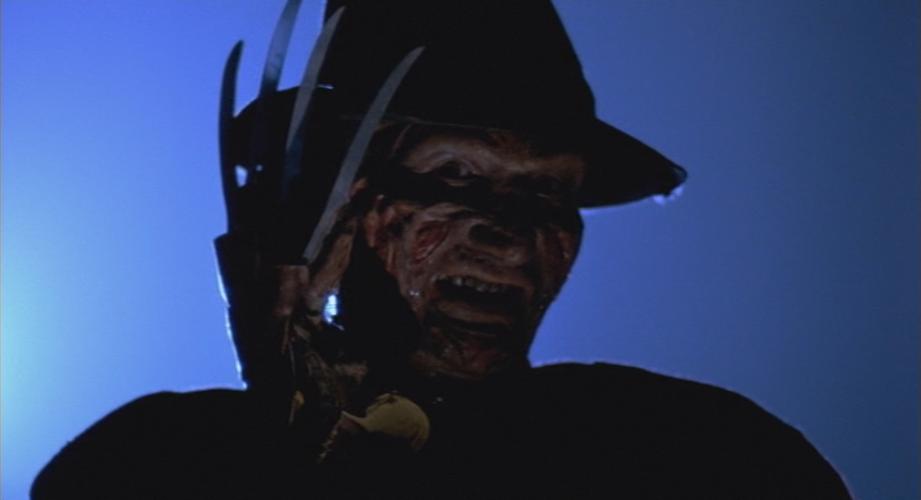
Freddie Krueger - A Nightmare on Elm Street (1984)
At a time when slasher movies were everywhere, there was something very distinct about the arrival of Freddie Krueger. Slashers were populated with lumbering killers who stalked their prey and who lacked having personality. This worked tremendously with Michael Myers from Halloween, but it was something that was over done and became stale. With A Nightmare on Elm Street we were given a psychotic villain who truly enjoyed what he did, taking great joy from toying with his victims.
Not only was the character of Freddie Krueger the polar opposite of what we had previously, but the concept itself is chilling. Sleeping is something that all people do. There is no way to get around it. It is something that is supposed to be restful, but director Wes Craven chose to flip that on its head. Dreams were where Kruger killed his victims, meaning that you could evade him for a while, but ultimately you would fall asleep and come face to face with him. While you could escape the gaping maw of Jaws by staying away form the water, Freddie Krueger was impossible run away from.
Burke - Aliens (1986)
Played by Paul Reiser, Burke was a charming feller. He stood by Ellen Ripley after her encounter in Alien, and was the nice guy who represented The Weyland-Yutani Corporation, the outfit that Ripley had worked for. Her experiences with The Corporation weren't good, as a synthetic being on her ship sought to sacrifice people to bring the dreaded xenomorph back for the financial benefit of The Corporation. Burke worked hard to show Ripley that he wasn't like that, that things had changed, and that returning to the planet of the alien was a mission to exterminate them.
What is interesting in the film is the transformation of Burke through the second and third acts, as his intentions creep to the surface. Not only did he lie to Ripley, but he planned to murder the entire crew to return with an alien sample. Reiser was game for this, becoming a snivelling suit that the audience wanted to see get offed in the worst of ways.
While there are more blatant villains in the cinematic landscape, Burke was the face of the evil Corporation. Financial interests far outweighed any human interests, and the bottom line shouldn't be affected by a few lives. It is a brilliant character, because, let's face it, there are plenty of organizations out there that will play the system and take some devious actions. This is something that most people already feel, that the little person doesn't matter when compared to profits. James Cameron just put a likeable face on that distrust that we already had, and made us hate him even more.
Whatever the heck is was in the woods - The Blair Witch Project (1999)
Some may say this movie is over rated, but probably not those who saw it early in theatres before the movie could be spoiled for them. Camping took on a whole new meaning, and the thought of being in the woods was terrifying. Not only was the style of filming (found footage) new to audiences, but the characters acted real. They slowly lose their patience and ability to reason as the movie progresses, and we are along for the ride. It is easily still one of the most intense theatre experiences I have ever had.
The complete beautiful thing here is that we never see what is out there. I always say that the imagination is the scariest thing, and directors Daniel Myrick and Eduardo Sanchez seemed to think along the same lines. There are plenty of scares to be had here, but it is all out of our view. All the audience can do is picture what is happening in their heads. It's like being in a house at night, not able to sleep, and all of a sudden hearing something out of the norm. Your mind can create a hundred awful scenarios very quickly. Sadly, many people will not enjoy this film as much as those of us who were there in 1999. The style of filming has been used to the point of nausea, and, as such, The Blair Witch could be a let down. I can tell you this, though, for myself and many others who were there when it came out in theatres, the idea of getting into a tent at night wasn't going to happen, and it was all because of what we didn't see.
The Joker - The Dark Knight (2008)
When I was a child and saw Jack Nicholson play The Joker in Tim Burton's Batman, I was enthralled. We saw the devilish Jack Napier transform into the ever-smiling Joker, a man who then set his sights on power. Nineteen years later, Heath Ledger gave us an interpretation of The Joker that pushed aside any notion we had ever had of this comic book villain.
Christopher Nolan had created a monster with no ambition other than just chaos and madness. Gone was the smile of the past, replaced by gruesome scars that insisted on a horrific past for the character. While Batman was a person who was trying to show hope and a spirit of standing for justice, he was pushed to the edge by an opponent with no moral compass that would take things to unheard of levels. It was Heath Ledger that took the premise and gave a performance like none before, stealing every single scene he was in, and casting a disturbing light over an already dark movie.
Some Runner Ups
Michael Myers - Halloween. Why did we do it? Who exactly was he? We didn't know, and that added to the terror.
Chucky - Child's Play. This was the genre thrown upside down. The killer wasn't a massive lurker, but a little toy resembling My Buddy.
Hans Gruber - Die Hard. He was slickly dressed, he had an appreciation for scale models, and was a no terrorist. Alan Rickman's performance gave a perfect baddie for John McClane to fight.
Darth Maul - Star Wars: Episode One. It was a sad movie, but the visual design of Darth Maul was a work of genius. Throw in the martial arts fluidity of Ray Park, and this was a very interesting Sith to watch.
The Babadook - The Babadook. A supernatural creature that comes from a twisted children's book and is unbelievably scary. It was the first movie in over a decade that legitimately made me scared.
So, it is time for what I consider the best movie villain...
John Bunting - The Snowtown Murders (2011)
I'm not picking this to be one of those people who want to flaunt that they have seen unheard of movies. This is a legitimate antagonist for the ages. Daniel Henshall plays Bunting, a real life killer from Australia. Henshall's performance shows how someone can not only end up doing horrible things, but how they can entrance others to get in on the corrupt act.
The movie is directed with insane brilliance, but it is really Henshall that steals the show. Bunting is a confident person, charming like none other. There is a darkness to him, though. We see it at times, and the revelation that comes of what Bunting really is happens slowly and with complete precision. What begins as a likeable fellow concludes the movie with a genuine insight into the darkest nature of human beings.
There are many horrors with good villains that are fun, and some that scare, but Bunting was beyond that. When the movie finished, I was compelled to write about it. Something happened. Through Henshall, I had seen something of human nature that was without reason, and without conscience. It was ruthlessly disturbing, not because we saw a monster destroy lives, but because it was what regular human beings were pulled into through the perverse gravity of John Bunting.
Thursday, October 31, 2013
Scott's Five Favourite Horror Films
It's Halloween today, and I was going to celebrate the sugar-fueled day by doing a horror movie review. It was particularly hard to come up with the right one to do, so I am going to do my five favourite horrors of all time. The thing with 'favourites' are they are not necessarily what you would call the best, but they are what captured your imagination the most. In this case, this list includes three that I would easily put on a list of 'bests' as well. The other thing with lists as such is that they are always shifting and changing as we go through different phases of life. Who knows, next year I may have five different films on this list. Now, it's time for me to dim the lights and point a flashlight up into my face as we get into this spooky list.
5 - 28 Days Later (2002)
This film is about a viral outbreak of a man-made virus that is designed to simulate pure rage. It was designed to put into primates so scientists could find a cure for it and perhaps create a pill that keeps humans from entering fits of rage. A bunch of no-good do-gooders enter the lab to free the chimps, and then starts the outbreak, as the virus is transmitted through fluids such as getting bit by an infected being. Twenty eight days after this event, we see Jim (Cilllian Murphy) wake up from a coma in a deserted hospital, and wandering the empty streets of London which is left in a state that implies a massive disaster has happened. He finally comes across a number of people asleep in a church, only to realize that they have become insane, bloodthirsty maniacs.
Very few films are actually able to instill a sense of uneasiness and fear in me, and 28 Days Later was able to put me, quite literally, on the edge of my seat. It was shot in a very smart style, and director Danny Boyle knew well how to let the environment create tension. The sequence of Cillian Murphy wandering around the ominously empty city of London is an all time classic, and allows the audience to get a feel of the emotions that Jim is going through as the world he knew now ceases to exist. The second half of the movie is quite a transition in tone, as it turns to focus more on the 'safety' that survivors of this event can have living with other survivors, and that perhaps the sane people are in the end more dangerous and deadly than the infected.
The Mark It Left On Cinema - this movie is essentially the reason why zombies have become such a fad lately. It took the genre and modernized it, allowing the concept to be more intriguing in today's world. It now had zombi-ism as a viral disease as opposed to the dead being re-animated and returning to life. It also made it so that zombies no longer just waddled around, but instead sprinted unrelenting towards their target. It is the reason we have The Walking Dead on AMC, and why there was such a big budget zombie movie in World War Z come out during this past summer. It brought life to a dead genre (pun totally intended) and caught the fears and imaginations of film makers and audiences, forever altering the genre.
Rating - 3.5 out of 4 stars
4 - The Blair Witch Project (1999)
Set around the disappearance of three film students, the movie is done in the found footage style, while such movies are a dime a dozen now, this really took the format into the mainstream. It is about students who are filming a documentary on the local mythologies of a haunted woods near Burkittsville, Maryland and end up getting lost in the woods. The movie focuses on their frictions with each other over the situation, but also their personal journeys into weakened states of sanity. Each night they become the victims of a psychologically tormenting actions, and are unable to determine who their tormentors are or what their motives could be.
The beauty of this film is that it shows very little, and I am always a big fan of movies that give the audience enough credit to be able let their imaginations fill in the gaps. We get little bits and pieces here and there, with no real answer as to what is happening. The scenes are brief, but completely effective, as this movie left a lasting impression on me and came back to haunt me whenever I was sleeping in a tent. The end of the film (which may not stand up to today's standards of needing jump scares) was a dreadful, frantic, and riveting experience in the theatre. If one paid close attention to the different local mythologies being explained at the beginning of the film, the very last image is one that will stay with you for a long time.
The Mark It Left On Cinema - The Blair Witch Project left two huge imprints on the cinematic landscape. First of all, it popularized the found footage style. The full effects of it were not felt right away, but a few years afterward with movies such as Paranormal Activity, Quarantine, and Cloverfield. It also set a blueprint for a low-budget/high grossing model that is being successfully used by many people, most notably Blumhouse Productions (Insidious, Paranormal Activity), who extensively use this format to achieve an almost unrivaled profit to expense ratio. Sadly, it would have been great if the impact that it left was the 'less is more' philosophy when it comes to scary visuals.
Rating - 4 out of 4 stars
3 - Alien (1979)
In space no one can hear you scream. That is quite true for the crew of the Nostromo, a deep space freighter that comes across a transmission of unknown origin and wakes the crew from their slumber to investigate, as part of a clause in their contract. The crew of frieght haulers is forced to investigate the source of the transmission or else they basically forfeit their shares. What they find on the surface of the planet with the signal is a crashed space ship, and inside a cavern of organic sacks, one of which opens and lets out an organism that attaches itself to the face of one of the exploring, blue collar crew. When he is brought back to the ship, a gruesome discovery is made - the organism had implanted an embreo inside him, and eventually, birthed out of his stomach in an iconic scene, is the alien. The crew knows that they must capture this creature, but that endeavour starts to prove fruitless as the alien starts to hunt the members of the Nostromo.
When Ridley Scott made this film, patience was the driving force of the film. It is an incredibly slow build, with no aspect of the movie being rushed. We see extensive footage of the ship's interior, which allows us to start to create it as a real space in our minds, connecting us with the claustrophobic terror that is unravelling. The creature itself is something that we do not get good glimpses of until the end, but it's presence is teased with and tracked with motion trackers that give sporadic beeps at the creature's presence, and that allows the scenes to be completely enveloped with the tension, as neither the characters or audience actually knows where the creature is.
The Mark It Left On Cinema - This is one where I could write for days and days about. It was such an immersive environment that was created that so many people caught the bug, and influences can be seen in all sorts of movies. The creature itself became very iconic and has influenced many other alien creations. The sequel, Aliens, continued the influence with the addition of the futuristic military which set almost a template for the look of the marine of the future. Video games such as Halo and Star Craft took a lot of their concepts from the Alien franchise. Sigourney Weaver's character, Ellen Ripley, has also become a bit of an archetype for a strong female who rises to the occasion.
The left is Sargent Johnson from Halo and on the right is Sargent Apone from Aliens
Rating - 4 out of 4 stars
2 - Jaws (1975)
It is summer on Amity Island, and that means tourists, and that means tourist dollars. Unfortunately for the mayor of the small town, there is also a deadly great white shark patrolling the waters, looking for its next meal. Newly appointed police chief, Martin Brody (Roy Scheider) starts to piece together the death of a swimmer as a shark attack, but that would scare away tourists and their dollars (Amity has a very business oriented mayor). The attacks continue, and Brody calls in a marine biologist from the mainland, Hooper (Richard Dreyfus) who tries to help Brody in the efforts to gain control of the situation. Ultimately, the community resorts to hiring Quint (Robert Shaw), a surly bastard of the sea, if ever there was one. He promises that he can bring the fish in, but reluctantly has to accept both Brody and Hooper as crew mates as they head out to find the killer shark.
We seem to gravitate towards having a fear of the unknown, and the brilliance of this movie is the unknown that circles beneath us as we are vulnerably swimming in the ocean. Teeth appearing from the depths was the emotional hook that Spielberg used as a means for our unease and tension, and kept the tone unbalanced as nobody was safe from the appetite of the shark (it happily swallowed both dogs and children). This was not the core of the movie, though. We also had a great adventure and journey that Brody, Hooper, and Quint went on that brought about the sense of the unknown and the danger and isolation at sea. This movie is the ultimate proof that you can make a horror movie with a story so good that it transcends the genre to the point that many people forget that it actually is a horror film.
The Mark That It Left On The World - This film did more than just transform film. It birthed the modern format for the summer blockbuster. That's a heck of an imprint. It seemed to start an entire new genre, 'terror in the water' which is mainly full of numerous b-movies, but the titles that spawned off of Jaws are countless. This film also affected people personally as they entered the water. Some movies you can leave at the theatre, but the terror of those teeth appearing below you is one that swimmers could not shake. The biggest impact that the movie had was the view that society took of sharks. I have seen documentaries on the shark hunting that happened post-Jaws, with a severe drop in shark populations happening along the eastern seaboard of the United States. While some films affect the film industry, this film, quite sadly, ended up affecting an entire ecosystem.
Rating - 4 out of 4 stars
1 - Psycho (1960)
The movie follows Marion Crane (Janet Leigh), who works at a realtor's office, steals $40,000 and runs away. Money is tight and it could provide hope for a future and marriage with her boyfriend Sam Loomis (John Gavin). While on the run, Marion pulls off the road at night to find shelter from the rain at the Bates Motel where she meets the owner, the socially nervous and quiet Norman Bates (Anthony Perkins). Perkins invites her to the parlor for some food, and they have a conversation that is seemingly surface levels, but there are some definite undertones in Bates that may say there is more to the man than we can see. Crane, after having fought her conscience and convictions, decides that she must return home with the money. Before she has the opportunity to, she is brutally stabbed to death in the shower, leaving a mystery to be solved when people realize she is missing.
What to say, what to say. I saw this film when I was a teenager and fell head over heels in love with it. It is a true, all-time great, and it achieves that by doing what almost every horror film after it forgets to do... focusing on the characters to the point that we really know who they are. A typical horror is all about the body count, racking them up with creative deaths. Psycho killed its leading lady after we spent a great deal of time getting to see her motivations, personality, and conflicts. When she dies, when know exactly who Marion Crane is, and that means something to us. It was not rushed, and took its time in getting to that tragic event. Throw into the mix the dynamic and haunting performance of Anthony Perkins as Norman Bates, and you have a movie that changed the way horror was done. He was the most normal, unintimidating villain you could ever have, and there was something completely unsettling about that.
The Mark It Left On Cinema - One only needs to follow the progression of the slasher sub-genre of horrors to see what Alfred Hitchcock's Psycho brought about, as it essentially birthed that style of movie. The musical score or high pitched string instruments is something that has been used many times over in horror movies, and is still used to this day. It is a classic tale that is not only held in high regard amongst horror films, but is often viewed as one of the best films ever made. For me, the imprint that it leaves on me is seeing Norman Bates in his parlor, with a stuffed bird of prey in action right above him, a foreshadowing of his character, as he says calmly to Marion, 'we all go a little mad sometimes.'
Rating - 4 out of 4 stars
5 - 28 Days Later (2002)
This film is about a viral outbreak of a man-made virus that is designed to simulate pure rage. It was designed to put into primates so scientists could find a cure for it and perhaps create a pill that keeps humans from entering fits of rage. A bunch of no-good do-gooders enter the lab to free the chimps, and then starts the outbreak, as the virus is transmitted through fluids such as getting bit by an infected being. Twenty eight days after this event, we see Jim (Cilllian Murphy) wake up from a coma in a deserted hospital, and wandering the empty streets of London which is left in a state that implies a massive disaster has happened. He finally comes across a number of people asleep in a church, only to realize that they have become insane, bloodthirsty maniacs.
Very few films are actually able to instill a sense of uneasiness and fear in me, and 28 Days Later was able to put me, quite literally, on the edge of my seat. It was shot in a very smart style, and director Danny Boyle knew well how to let the environment create tension. The sequence of Cillian Murphy wandering around the ominously empty city of London is an all time classic, and allows the audience to get a feel of the emotions that Jim is going through as the world he knew now ceases to exist. The second half of the movie is quite a transition in tone, as it turns to focus more on the 'safety' that survivors of this event can have living with other survivors, and that perhaps the sane people are in the end more dangerous and deadly than the infected.
The Mark It Left On Cinema - this movie is essentially the reason why zombies have become such a fad lately. It took the genre and modernized it, allowing the concept to be more intriguing in today's world. It now had zombi-ism as a viral disease as opposed to the dead being re-animated and returning to life. It also made it so that zombies no longer just waddled around, but instead sprinted unrelenting towards their target. It is the reason we have The Walking Dead on AMC, and why there was such a big budget zombie movie in World War Z come out during this past summer. It brought life to a dead genre (pun totally intended) and caught the fears and imaginations of film makers and audiences, forever altering the genre.
Rating - 3.5 out of 4 stars
4 - The Blair Witch Project (1999)
Set around the disappearance of three film students, the movie is done in the found footage style, while such movies are a dime a dozen now, this really took the format into the mainstream. It is about students who are filming a documentary on the local mythologies of a haunted woods near Burkittsville, Maryland and end up getting lost in the woods. The movie focuses on their frictions with each other over the situation, but also their personal journeys into weakened states of sanity. Each night they become the victims of a psychologically tormenting actions, and are unable to determine who their tormentors are or what their motives could be.
The beauty of this film is that it shows very little, and I am always a big fan of movies that give the audience enough credit to be able let their imaginations fill in the gaps. We get little bits and pieces here and there, with no real answer as to what is happening. The scenes are brief, but completely effective, as this movie left a lasting impression on me and came back to haunt me whenever I was sleeping in a tent. The end of the film (which may not stand up to today's standards of needing jump scares) was a dreadful, frantic, and riveting experience in the theatre. If one paid close attention to the different local mythologies being explained at the beginning of the film, the very last image is one that will stay with you for a long time.
The Mark It Left On Cinema - The Blair Witch Project left two huge imprints on the cinematic landscape. First of all, it popularized the found footage style. The full effects of it were not felt right away, but a few years afterward with movies such as Paranormal Activity, Quarantine, and Cloverfield. It also set a blueprint for a low-budget/high grossing model that is being successfully used by many people, most notably Blumhouse Productions (Insidious, Paranormal Activity), who extensively use this format to achieve an almost unrivaled profit to expense ratio. Sadly, it would have been great if the impact that it left was the 'less is more' philosophy when it comes to scary visuals.
Rating - 4 out of 4 stars
3 - Alien (1979)
In space no one can hear you scream. That is quite true for the crew of the Nostromo, a deep space freighter that comes across a transmission of unknown origin and wakes the crew from their slumber to investigate, as part of a clause in their contract. The crew of frieght haulers is forced to investigate the source of the transmission or else they basically forfeit their shares. What they find on the surface of the planet with the signal is a crashed space ship, and inside a cavern of organic sacks, one of which opens and lets out an organism that attaches itself to the face of one of the exploring, blue collar crew. When he is brought back to the ship, a gruesome discovery is made - the organism had implanted an embreo inside him, and eventually, birthed out of his stomach in an iconic scene, is the alien. The crew knows that they must capture this creature, but that endeavour starts to prove fruitless as the alien starts to hunt the members of the Nostromo.
When Ridley Scott made this film, patience was the driving force of the film. It is an incredibly slow build, with no aspect of the movie being rushed. We see extensive footage of the ship's interior, which allows us to start to create it as a real space in our minds, connecting us with the claustrophobic terror that is unravelling. The creature itself is something that we do not get good glimpses of until the end, but it's presence is teased with and tracked with motion trackers that give sporadic beeps at the creature's presence, and that allows the scenes to be completely enveloped with the tension, as neither the characters or audience actually knows where the creature is.
The Mark It Left On Cinema - This is one where I could write for days and days about. It was such an immersive environment that was created that so many people caught the bug, and influences can be seen in all sorts of movies. The creature itself became very iconic and has influenced many other alien creations. The sequel, Aliens, continued the influence with the addition of the futuristic military which set almost a template for the look of the marine of the future. Video games such as Halo and Star Craft took a lot of their concepts from the Alien franchise. Sigourney Weaver's character, Ellen Ripley, has also become a bit of an archetype for a strong female who rises to the occasion.
The left is Sargent Johnson from Halo and on the right is Sargent Apone from Aliens
Rating - 4 out of 4 stars
2 - Jaws (1975)
It is summer on Amity Island, and that means tourists, and that means tourist dollars. Unfortunately for the mayor of the small town, there is also a deadly great white shark patrolling the waters, looking for its next meal. Newly appointed police chief, Martin Brody (Roy Scheider) starts to piece together the death of a swimmer as a shark attack, but that would scare away tourists and their dollars (Amity has a very business oriented mayor). The attacks continue, and Brody calls in a marine biologist from the mainland, Hooper (Richard Dreyfus) who tries to help Brody in the efforts to gain control of the situation. Ultimately, the community resorts to hiring Quint (Robert Shaw), a surly bastard of the sea, if ever there was one. He promises that he can bring the fish in, but reluctantly has to accept both Brody and Hooper as crew mates as they head out to find the killer shark.
We seem to gravitate towards having a fear of the unknown, and the brilliance of this movie is the unknown that circles beneath us as we are vulnerably swimming in the ocean. Teeth appearing from the depths was the emotional hook that Spielberg used as a means for our unease and tension, and kept the tone unbalanced as nobody was safe from the appetite of the shark (it happily swallowed both dogs and children). This was not the core of the movie, though. We also had a great adventure and journey that Brody, Hooper, and Quint went on that brought about the sense of the unknown and the danger and isolation at sea. This movie is the ultimate proof that you can make a horror movie with a story so good that it transcends the genre to the point that many people forget that it actually is a horror film.
The Mark That It Left On The World - This film did more than just transform film. It birthed the modern format for the summer blockbuster. That's a heck of an imprint. It seemed to start an entire new genre, 'terror in the water' which is mainly full of numerous b-movies, but the titles that spawned off of Jaws are countless. This film also affected people personally as they entered the water. Some movies you can leave at the theatre, but the terror of those teeth appearing below you is one that swimmers could not shake. The biggest impact that the movie had was the view that society took of sharks. I have seen documentaries on the shark hunting that happened post-Jaws, with a severe drop in shark populations happening along the eastern seaboard of the United States. While some films affect the film industry, this film, quite sadly, ended up affecting an entire ecosystem.
Rating - 4 out of 4 stars
1 - Psycho (1960)
The movie follows Marion Crane (Janet Leigh), who works at a realtor's office, steals $40,000 and runs away. Money is tight and it could provide hope for a future and marriage with her boyfriend Sam Loomis (John Gavin). While on the run, Marion pulls off the road at night to find shelter from the rain at the Bates Motel where she meets the owner, the socially nervous and quiet Norman Bates (Anthony Perkins). Perkins invites her to the parlor for some food, and they have a conversation that is seemingly surface levels, but there are some definite undertones in Bates that may say there is more to the man than we can see. Crane, after having fought her conscience and convictions, decides that she must return home with the money. Before she has the opportunity to, she is brutally stabbed to death in the shower, leaving a mystery to be solved when people realize she is missing.
What to say, what to say. I saw this film when I was a teenager and fell head over heels in love with it. It is a true, all-time great, and it achieves that by doing what almost every horror film after it forgets to do... focusing on the characters to the point that we really know who they are. A typical horror is all about the body count, racking them up with creative deaths. Psycho killed its leading lady after we spent a great deal of time getting to see her motivations, personality, and conflicts. When she dies, when know exactly who Marion Crane is, and that means something to us. It was not rushed, and took its time in getting to that tragic event. Throw into the mix the dynamic and haunting performance of Anthony Perkins as Norman Bates, and you have a movie that changed the way horror was done. He was the most normal, unintimidating villain you could ever have, and there was something completely unsettling about that.
The Mark It Left On Cinema - One only needs to follow the progression of the slasher sub-genre of horrors to see what Alfred Hitchcock's Psycho brought about, as it essentially birthed that style of movie. The musical score or high pitched string instruments is something that has been used many times over in horror movies, and is still used to this day. It is a classic tale that is not only held in high regard amongst horror films, but is often viewed as one of the best films ever made. For me, the imprint that it leaves on me is seeing Norman Bates in his parlor, with a stuffed bird of prey in action right above him, a foreshadowing of his character, as he says calmly to Marion, 'we all go a little mad sometimes.'
Rating - 4 out of 4 stars
Subscribe to:
Posts (Atom)
About Me
- Scott Martin
- I'm smarter than a bat. I know this because I caught the little jerk bat that got in my apartment, before immediately and inadvertently bringing him back in. So maybe I'm not smarter than a bat.


