Friday, December 21, 2018

The Last Jedi: I'm Not Sexist, But...


It has been just over a year since Star Wars: The Last Jedi came out in theatres, a film from director Rian Johnson that blew me away and is only second to Empire Strikes Back in my rankings.  Over three hundred and sixty five days later I am still both bewildered and saddened by something that came about from its release.  After seeing the film, a number of people took to the internet because they had a problem with it.  The issue was the fact that there were a number of female characters and it was feminizing the franchise that these fanboys love.

I personally heard people criticizing the mass amounts of women in the movie, in shock that such a thing would happen.  Women are fifty percent of the population (something that I sadly seem to have to say way too many times), and yet for some reason some fans believe they cannot approach that representation in film.  The outrage that came about because of the increased number of females speaking in the film made it sound like the woman had taken over the film completely and that males were now left with little to do.

Let's get to the reality of the situation. There are six main female roles in The Last Jedi.  There were nine main roles for men.  I have included smaller speaking roles for both genders, like Yoda and Maz Kanata.  The math (which the fanboys seem to ignore) shows that there are fifty percent more men than women.  Yep, still kind of a sausage party, but that isn't realized.  There were efforts by groups of angry fans that tried to drive down the audience score on Rotten Tomatoes.  Honestly, that sort of effort makes it seem like there would be an almost all female cast.  The problem appears to be not that there were more women than men (which there obviously wasn't), but the fact that there were multiple roles for women.

I will be honest.  The fanboys that lurk on the internet generally seem to be misogynistic and immature.  Women were still under-represented in The Last Jedi, but the fact that they had more than a few characters means it was too much.  The fanboys miss the days like in the first film where the only woman was literally a princess to be rescued by men (luckily it turns out she was strong and spunky).  Sorry, there was also Aunt Beru and the minuscule role she played.  That is when the franchise was in its glory days, when even the various aliens were also swinging dicks.

Seeing the reaction that came about last year really was sad.  It is nice to witness how much humanity has progressed in terms of equality, but it is also naive to believe that the days of ignorance and bigotry are behind us.  Remember, the people freaking out weren't upset that there were more men than women.  They weren't upset that there were the same amount of women as men.  They were upset because more woman actually had a role to play in a franchise that they love.

So, my dear fanboys, understand that the very fact that you don't believe that having fifty percent more males than females is adequate, then you are most likely sexist.  Yes, if you are reading this and the apparently overwhelming amount of women was a problem for you in The Last Jedi  then you are most likely sexist.  I'm sure you don't believe that you are, but I can tell you that you are just like those people who say, "I'm not racist, but..."  The basic nature of this whole issue is sexism.

For all of those out there that actually care about equality, be happy in knowing that the year The Last Jedi came out the top three movies in the box office all had a female protagonist.  While there are some vocal, mucus brained dip-shits out there shouting through their keyboards, audiences have shown studio executives that equality is accepted as well as profitable.  These fanboys will carry on with their crusade, but thankfully the rest of the population has proved that they aren't caring as much about the X and Y chromosomes.  Well told stories are what the majority of us are after, regardless of gender representation.

Wednesday, December 19, 2018

It's Not Unusual: The Battle Over A Dance


Do you remember The Fresh Prince of Bel-Air?  More specifically, do you remember the character Carlton from The Fresh Prince of Bel-Air?  Even more specifically, do you remember the way Carlton from The Fresh Prince of Bel-Air danced when he listened to Tom Jones’ ‘It’s Not Unusual?’  For people like me who watched the show every single week, of course I remember.  Other people quite possibly won’t have any recollection of it at all.  That was many years ago, and here we are talking about it twenty two years after the show went off air.

It turns out that Alfonso Ribeiro, the actor who played the role of Carlton Banks in The Fresh Prince, is taking legal action against the insanely popular video game Fortnite.  The reason?  The game uses an emote that makes a person’s character dance exactly how Carlton did.  Because Fortnite’s Battle Royale mode is free to play, they make most of their money through micro transactions that offer cosmetic variety to its players.  That means that for people to get the ability to dance like Carlton they have to pay money, meaning that game company Epic Games is profiting off it.  Ribeiro says that the dance is his intellectual property and that he deserves royalties from it.

I can see where he’s coming from, and I can get on board with it.  He created something that became iconic for fans of a franchise, and it is apparently something that he still does.  The goofy, energetic dance is unlike anything else.  If people who create something aren’t able to get the rewards of that then it cripples the artistic community.

On the other hand, the road that this sort of legal action takes us down also could have crippling effects on the artistic community.  So much of human dialogue is based off of our experiences of hearing other people talk, whether in person on through media.  Anyone who writes characters know that they have to speak organically, and that includes these characters referring to things within their sphere of influence.  So many times I have heard a character in a movie or television show say, “we’re gonna need a bigger boat.”  It works for the audience because this rings true to speech as well as tickling them when they can pick up on a reference they know.  What if Roy Scheider took to court anyone who used that line?  It was his line after all, and is one of the most remembered aspects of Jaws.

Would we think that someone should be able to do the Macarena in a movie, show, or video game?  I understand paying for the music, but should the artist have to pay Los de Rio for doing the dance?  This is where things will start getting murky.  Ultimately every single dance was created by someone at some time.  I know that I had seen multiple shows and movies where people have done the Moon Walk.  Would it make sense that they couldn’t do something that was such a deeply ingrained part of culture?

Here’s where I stand.  Yes, things that people create need to be protected, but in some cases it needs to be accepted that a part of that work has transcended the medium and actually become a collective part of the human experience.  If you think about it, every single cliche, catch phrase, or buzzword first came off the lips of somebody who could then claim it theirs.  There are visuals such as someone standing at the bow of a boat just like Jack in James Cameron’s Titanic that are constantly used because the reference has become ingrained as a part of North American culture.  Should something be restricted when it has become part of the public experience?

While I do understand where Ribeiro is coming from, I think that what this could lead to (not necessarily the case itself) is making things harder for artists and creators.  To capture human nature we sometimes need to lean on those references, visuals, or sayings.  To add another layer of thought for people different references or quotes could be interlaced with dialogue.  There are many reasons why an artist would ether reference or build on what someone else has already done, and it would be a shame for people to eventually become limited to not be able to use any quotes, visual imitations, catch phrases, or buzzwords.


I understand that the case of Alfonso Ribeiro doesn’t sync with all that I am talking about here.  It isn’t this specific case that is the main issue, it is the direction that this can take ownership over things that have become part of the collective human experience.  I wish him good luck in his case, I just worry over where we end up in the future.

Monday, November 19, 2018

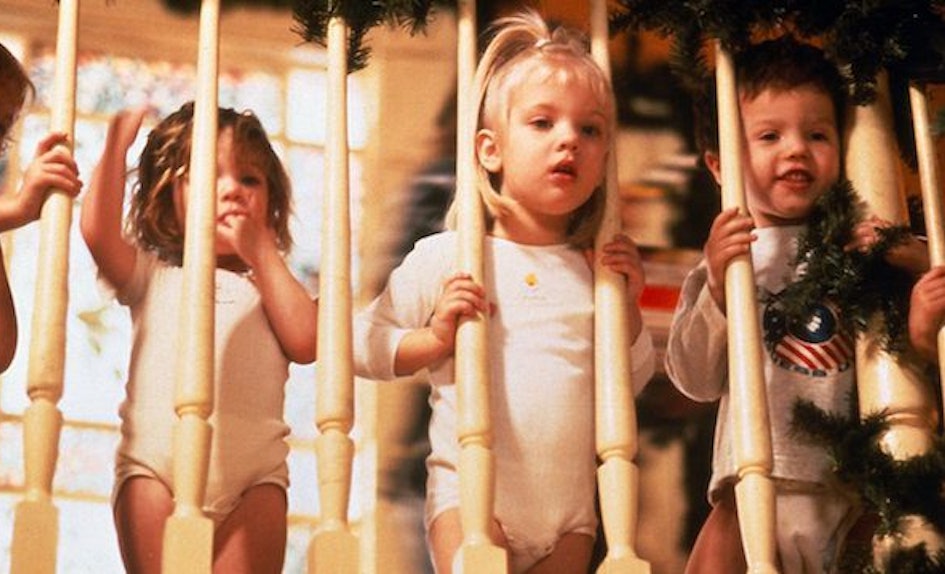
REVIEW: Baby Geniuses


If I didn't lose a competition then I never would have seen this film.  I will make that very clear right now.  Netflix, I know you see what I watch and you probably believe that because I clicked on something then it is worth keeping on your service.  It is not.  I made sure to give Baby Geniuses a thumbs down, but I am concerned that isn't adequate.  Picture the world's thumb wrestling champion turning their roided up opposable digit to the ground with the emphasis of thirteen William Wallace's screaming 'FREEDOM', and then multiply that by a factor of ten and we are starting to get into the neighbourhood.  It still isn't a good neighbourhood.

Interesting, Baby Geniuses doesn't have a single baby in it.  If we are playing the semantics game (and I think we should be up for playing any game possible because it will all be more fun than the movie) the film is populated by toddlers.  It's toddlers.  Not babies.  In this mess of a movie, any human being below the age of two knows all of the secrets of the universe.  Yes, toddlers (not babies) apparently know everything from the meaning of Stonehenge to the Caramilk Secret.  Essentially they are Google Kids.

This film starts in a horrible state.  In the first five minutes we have ugly fish eye camera, awkward and poorly framed tight shots of people's faces, titled cameras (because we all know that tilting a camera is a good substitute for a script), semi-extreme closeups (Wayne knows what I'm talking about), and hideous slow motion.  Just because a movie is made for kids doesn't mean it should have absolutely obnoxious directing.  It is terrible.  I called it quits at the five minute mark and had to wait a day before I was able to return to it.

For some reason there is an underground facility that houses lots of baby geniuses.  Kathleen Turner and Christopher Lloyd are bad people, and I guess the kids are good.  Remember, they're Google Kids, so they're going to advertise to you if they can.  I would like to tell you the exact reason for these kids being used by evil people, but I seriously couldn't care at the time of watching it, and I couldn't care less while writing about it.  Director Bob Clarke did everything he could to tell me what was going on.  After the first opening sequence, the next ten minutes are simply bang you over the head expository dialogue.  It is so bad that we have Christopher Lloyd's character for some reason asking a computer voice to tell him the synopsis of their evil program.  Ugh.

Look, director Bob Clarke missed the mark on this one.  To me, he is someone who brought two very important movies to audiences.  He did the immortal A Christmas Story, and he was almost ahead of his contemporaries in a way with Black Christmas.  Oh, and he did Porky's, for which I don't believe he ever apologized.  He did some bad things, but he also made some classics.  Any abilities that were evident in other films were absent in Baby Geniuses.  Technically, this thing is about as low quality as you can get from a wide release movie.  There is so much dialogue that is dubbed.  I'm not sure what happened in the audio department, but the sound difference between what is dubbed and what isn't is plenty big.  It sounds horrible, and it looks ugly as the words we hear aren't even close to syncing with people's lips.   This. Is. Bad.

People may say, 'oh, it's not too bad, and it's just for kids.'  Sometimes it seems as though people have the thought that movies for kids shouldn't be held up to similar standards as other films.  No matter what a movie is about, the people making it should care about their work.  Some of my favourite movies of the past five years have been family films, and I enjoyed them because their creators cared about them.  With Baby Geniuses, it is evident that nobody in production or post production pushed for this to be a quality product, and I'm talking simply from a technical standpoint.  The script is another mess completely, and the acting is from people who appear to have lost a bet.  What is really sad, and I'm not exaggerating on this, is that made for TV movies have better polish and audio than this thing.

The main event of the film, the 'babies (two year olds that are super brilliant but don't know a single English word), could be described as cute at times I suppose.  However, with the special effects employed to move their mouths to dialogue and to get them to do things like dancing can make them creepier than Paul Reubens as the Tooth Fairy.  To the film's credit, there are a few moments where they seem to have gotten the exact expressions and motions out of the kids as they needed, but that really doesn't happen often enough to forget just how bad things look at times.  And also, the horrible, grainy looking slow motion shots that make an appearance at the beginning and end of the film are amateurish.

Music is a bit of a curiosity in this film as well.  I don't know a quality movie that would choose to un-ironically use Taco's version of 'Puttin on the Ritz.'  Yes, it is the song with the music video where the two black face people chant 'super duper' for some reason.  Oh, and then they ol' timey tap dance.  The song is about as 80s of a song as you can get, and it is cringe worthy.  Why they didn't use the original, quality version is something I will never know.  Also, and even more baffling, there is a final song that seems to function as a send off to all of the antics of the 'babies' at the end of the film.  We are seeing cheerful clips of the 'babies' while there is a life zapping country song playing.  The rhythm is soooo dreadfully dull, and the enthusiasm in the singer's voice makes it sound like he was burying his dead horse when his wife left him after getting a notice that the bank is foreclosing, which means they are going to lose the farm that's been in the family for five generations of McCanty's, and there is no way that she is going to let her kids grow up in the home of a failure McCanty.  The song for that final montage is such an atrocious pick, and it is better suited for some sort of drunken funeral march than for a film about 'babies,' genius or no.

I love A Christmas Story. I've been in love with it since I first saw it as a young kid, and I doubt I will ever change the channel if it is on the television.  I only saw Black Christmas a few years ago, but it instantly stood out as a horror that was predicting things to come.  Bob Clark was a skilled director, but for some reason he decided to forget everything he had learned about the process of making a movie over the decades and trade it in for the creation of a mockery that the KGB would use to extract information from captured spies.

Yes, this is a kids movie, but that shouldn't stop a reasonable adult from wanting quality.  You don't feed old batteries in pesto to children just because they are kids and they won't appreciate prime rib, so why feed them something like this.  They still deserve attention to detail, care, and a modicum of respect for their time.  Some of the world's greatest films are for the whole family (such as Wizard of Oz), and they are that way because the people making them believed in what they were doing.  The folks behind Baby Geniuses couldn't be bothered to make sure audio syncs up with what we see, something that even a novice can do, and I'm speaking as someone who did video editing for community television when I was a teen.  The issues of this film are so easily overcome, but they exist because there are some out there that believe your cherished children aren't worthy of effort.

If you're cruising around for something to watch, this shouldn't be it.  Burlap sacks are more intriguing than anything you will find in Baby Geniuses.  Enough people liked it for them to make a sequel, but don't be fooled by that.  This is a technically sloppy film that literally has someone asking a computer to for some reason tell him the entire plot for the movie.  Or maybe he got the computer to tell him the backstory.  I don't know, and it doesn't matter.  It was a slothful device.  I cannot think of a single movie I have seen with less effort in a script in what is one of the laziest forms of expository dialogue that you will ever find.  Resist.  Stay away.  Watch something like Inside Out, The Lion King, The Princess Bride, or The Secret of NIMH, each of them wonderful works that know to treat your family with respect, films that toil to nail each aspect of story telling.  Or, you could pull out that burlap sack from behind the thirty year old cross country skies in the shed and let your kids contemplate the significance of such a sack. They will enjoy that a whole lot more than Baby Geniuses, and you will know that deep down you gave them the better, more fulfilling option.

Rating - 0.5 out of 4 stars

Tuesday, November 13, 2018

REVIEW: Eighth Grade


The years of an early teen can be very turbulent.  I am sure that everyone out there can remember what it is like to worry about acceptance and attention, struggling to have a life of confidence.  Physical changes happen, hormonal changes take place, and social structures become more exclusive.    Director Bo Burnham's debut feature film, Eighth Grade, investigates this time of transition by looking at a few week's in the life of Kayla Day (Elsie Fisher) as she nears the end of grade eight.

Kayla isn't a person that mirrors all of our experiences directly.  She fas no friends, no voice for herself, and absolutely no confidence.  I know that only a small number of people out there will have been in a very similar situation, but Burnham knows that isn't the point.  The universal struggles of Kayla, the desire above everything to be noticed and to belong will hit home with anyone.  I was most certainly socially awkward, but I also know that the kids that had it all together faced the scary fear that they may not fit in and be accepted as well.  Kayla, although she is portrayed in an extreme, represents the emotional hurdles for all in that age range.

Acceptance is a big lust of Kayla's, and she believes that she must aim high.  The girls she tries to befriend are the coolest in the school.  Kayla is obsessed with Aiden (Luke Prael), her dream hunk.  Kayla's desire to date the cool boy is strong, as is the need to be befriended by the particular girls.  Elsie Fisher delivers a performance that conveys to the audience just how important this is to her, and how she needs this above everything else.  Life for Kayla, it seems, will have meaning should she achieve her goals.

Kayla's desires inevitably bring about some issues for her, as she needs to come to decide what lengths she will go to in able to get what she wants.  In the case of this film, Kayla thinks that sexuality is the way to get Aiden, that she needs to be exactly what he would want.  What is completely awkward is that Kayla really has no clue of what she is talking about, and is repulsed when she does a little research.  This is the treasure that is Kayla.  While the pressure of being socially accepted appears to override everything in her life, her character ultimately refuses to give away her innocence.

The realm of sexuality in young people is definitely something that Bo Burnham is addressing with Eighth Grade.  This is something that these kids are unable to escape, and Burnham shows how difficult it can be to stay true to yourself.  Kayla faces a few situations where she believes that she is supposed to act a certain way, that it is expected of her, and her conscience and her own comfort are tested.  I know that some people would probably prefer that sexuality isn't addressed in movies about kids, but the reality is that Kayla's struggles are real.  This is what kids face, and, as we see with Kayla, it takes courage to make the right decisions.

This brings up the issue with the movie's rating.  In Canada, it is rated 14-A.  In the United States, it has the R rating.  The film has a little bit of swearing that could be cut out, but Burnham's quest here is to reflect the harsh truth of life at this age.  Because of the rating, the audience that needs to see this the most, the group of people that should see Kayla's story and the decisions she makes, are unable to because of their age.  The rating system really misses the point of movies like this.  What is depicted here, while deemed inappropriate for kids in their early teens, is the truth of their life.  It is unfortunate that what they face every day at school is deemed too mature for them in a film that is not glamourizing these issues, but looking at the toll that they can take.

Social media and living online are a big part of this movie.  Kayla is almost constantly on her phone.  It is the life she lives, and it is a realm where she is not the nerdy kid.  She can be anything at all online.  Interestingly, Kayla creates Youtube videos where she gives life advice and guidance.  None of what she says is anything that she does in real life, and it is the perfect way for Burnham to show how different an online presence can be compared to what people are like offline.  The videos that Kayla makes are terrific, as she tries to spit out confidence, but can't stop over using words such as 'like.'

A part of the film that shows just how isolated kids may feel in their issues is Kayla's relationship with her father, Mark (Josh Hamilton).  Kayla's mother left the family, so it is just the two of them.  The want from her father to have a connection bleeds from the screen, and Hamilton portrays the longing of a parent to understand their child as well as to be understood.  While a lot of films may have focused largely on just what the character would face at school, here we have a touching and heart wrenching depiction of just how far away from their child a parent can be even while sitting at the same table.

All of the wonderful aspects of the story are created with realism through the acting of Elsie Fisher.  She is very young, but the pure range of nuance that is evident in her performance is something that many mature and weathered talents aren't capable of.  I have talked a lot about the heft of this movie, but there are many hilarious moments, and they are all perfectly earned thanks to Fisher.  This is some legit high level acting, the kind that really needs to be well considered for an Oscar nomination.  As I said earlier, Kayla is a conduit for all of us, regardless of if we were awkward like her or not, and Fisher is largely to thank for that.

This really is a wonderful tale.  There is ample humour, relatability, sadness, and triumph.  Bo Burnham created what feels like an authentic experience.  While I would say its target audience is young teens, it is a film that will speak to many adults.  It is a reminder of just how intense the battle for acceptance and identity is at that point in life.  What ultimately stands out is the courage of Kayla, someone who believes they are willing to do anything for friends, but seems to almost surprise herself when she refuses to act out of character.  While difficult at times, this film delivers laughter and, most importantly, connects us deeply to our protagonist and the outcome.  It is a beautiful tale that is easily one of the best films of the year, one that speaks to both kids as well as adults.

Rating - 4 out of 4 stars

Monday, November 5, 2018

REVIEW: War Room


If you don't have anything nice to say, don't say anything at all.  Yeah, I'm not going to be following that advice.  Sometimes things do need to be said, and I believe that is what should happen in the case of the faith based film, War Room.  I know that there are a lot of people that enjoyed this movie based on the fact that it has an 87% audience score on Rotten Tomatoes.  The film was also a financial success as it made $67 million on a budget of $3 million.  To all of the people that like this film and its message, I need to make it as clear as can be that I found this movie to be incredibly upsetting.

The story is about a married family that has struggles.  The wife, Elizabeth (Priscilla C. Shirer), suffers at the hands of the sternly controlling, borderline verbally abusive, and affair seeking Tony (T.C. Stallings).  They have a wonderful little girl, Danielle (Alena Pitts), who gets stuck seeing mommy and daddy fighting.  The story takes off when Elizabeth comes across a cliche named Clara (Karen Abercrombie), an elderly woman that has no boundaries that pries her way into Elizabeth's life to then mentor her.  The guidance that Clara gives, which is in fact the message of the movie, is where the serious issue arises.

Elizabeth is told to pray for her husband.  Sure.  Fine.  There is absolutely nothing wrong with that.  The problem is that this is ALL she is told she should do.  Clara, and the movie as a whole, is saying that in this situation, with a husband that is controlling, borderline verbally abusive, and actively seeking an affair, all the woman should do is pray.  She is not to assert herself.  She is not to stand up for herself.  She is not to question him on who this other woman is.  And, insultingly, she isn't even to express her feelings.  Nope, all she should do, as a good wife, is pray.  This, friendly reader, is absolute bullsh*t.

I understand that director Alex Kendrick is trying to show that people need to rely on God and trust Him, but try actually sitting down with a woman in an abusive relationship and telling her that she isn't even to call her husband out on what he does.  Elderly cliche, prying Clara nails home the fact that Elizabeth has to pray and get out of the way.  That is what Alex Kendrick is saying is to be done in such a situation.

Of course, this is all easily said within the safe confines of War Room.  A lot of faith based films that I have seen have tried to take 'gritty' topics (like the unhealthy marriage in War Room) to address, but then glaze everything over in a happily ever after fairy tale.  This film is no different.  The husband quickly comes to his senses and everything becomes picture perfect, and the real life questions are worse than ignored.  What happens if the prayer isn't answered?  What happens if the behaviour not only continues, but gets worse.  I guess that doesn't matter.  Apparently the woman is just supposed to take it and never even tell her spouse that she is hurt by what happens.

If you disagree with what I am saying, watch the movie again.  This is what Kendrick is saying, and I do not know how it could be argued otherwise.  The character of Clara is essentially the moral compass of the movie, and it is through her lips that the message is told.  Not only is Clara a cliche, but she is a dangerous cliche that tries to convince people that real life serious issues can be looked at with such simplicity.

  Six percent of females in Ontario report being physically or sexually abused by a spousal partner.  That's only the people who report it.  The real percentage is much higher.  What justice is being done to those poor sufferers (and the males that get abused as well) by saying that the only thing they should do is pray.  Maybe Kendrick would say that physical abuse is different, but, once again, where is the line drawn?  At what point would elderly, cliche, prying Clara advise a woman that she should actually do something for her own mental or physical health instead of just existing like a prisoner?

The message of this movie is quite brutal and is beyond tone deaf.  I mostly had female friends in high school, and had lots of female friends beyond that.  Sadly, I got to see the reality of these relationships that eat away at them and break them.  Never once, and never will I ever, would I have told them they needed to take the kind of fantasy, everything is always going to work out way that War Room puts forth.  There is much more than this simplistic approach.

I have no problem with spirituality being looked at through film.  I honestly think that is something that audiences are open to.  Everyone, regardless of their thoughts on religion, has had moments in their life when they have connected with something on a different level.  Whether it's looking at their new born child for the first time or sitting around a campfire with the magnificent starry sky overhead.  The problem is when movies address these things like War Room does.  It serves to only preach to the choir, and, as with most faith based films, presents themselves as dealing with 'real issues' but never showing actual struggle or consequence.  They come off as fantasy, missing out on opportunities to highlight what actual people deal with when confronted with faith.

There were a few aspects of the film that I do feel the need to point out as positive.  This is the first Kendrick brother film that looked like a real film.  For so long I have despised faith based films for having the same visual presence as Hallmark made for TV films.  People have argued back with me that I need to remember the budget that they were made on, but it doesn't take much knowledge of independent cinema to know that there are films made for a whole lot less that look a whole lot better.  The technical aspect of these films has always been embarrassing, so it is nice seeing that perhaps a corner has been turned.  The audio quality was legit level as well.  Having said all of that, I don't know if it's actually a praise to say that a movie that came out in theatres looked like a movie that would be distributed to theatres.  I don't say that about any other film.  I didn't last year say, 'Oh, wow!  Christopher Nolan made Dunkirk look like a movie!'

Young Alena Pitts, playing the daughter, was very fun to watch.  She had a great emotional range, and the only times in the movie where I felt any kind of connection to the state of the family was through her.  Also, at the end of the film there is a music montage (sigh... one of three music montages in the film... sigh...) that shows freestyle double-Dutch skipping.  I never knew such a thing existed, but there were some serious skills on display.

This movie was nothing but fantasy.  It is so far from feeling real world applicable, and, while seeming to claim a grittiness, it is candy coated in a world where there is no consequence.  I get what Kendrick was trying to show, but that's not what actually came out.  It's the same thing with the offensive Sucker Punch by Zack Snyder.  He believed the movie was really about female empowerment, when what his movie showed was that the only way women could be empowered was in their imaginations because they couldn't take what happened in the real world.  Both directors thought one thing, but, when the base premise is inspected, the films are really just tripe from men who don't seem to have a flippin' clue what women deal with.  People liked this movie, and feel free to argue with me over it.  We can go through the script line by line and nowhere will you find elderly, cliche, prying Clara (who is the bringer of the movie's message) saying anything that disproves what I have said.

Rating - 0.5 out of 4 stars

Wednesday, October 31, 2018

REVIEW: A Quiet Place


A Quiet Place is a tender story about family bonds, dealing with loss, and forgiveness while also being a cutting edge creature feature.  The typical modern horror movie is very loud, with the quiet moments generally happening just before a boisterous scare attempt.  Noise is applied often in formulaic ways that actually make predicting jump scares an easy task.  There are some movies that stand out for how they use sound (I remember The Others was a great theatre experience because of this), and A Quiet Place is possibly the best example of utilizing audio to tell the story.

What we have is a family of five that are trying to live in a world where alien monsters have arrived and hunt people for food.  The creatures cannot see and use heightened hearing to find their meals.  People need to be quiet to survive, and the Abbott family has three children, and kids can't help but make noise at times.  The parents are Evelyn (Emily Blunt) and Lee (John Krasinski), and it is not long before something tragic happens to their family leading to friction between the father and Regan (Millicent Simmonds), the eldest daughter.  Regan is def, so the family knows how to use sign language, which comes in handy.

The majority of the film takes place on one day.  Evelyn is very pregnant, and there is a great deal of tension over when the baby is going to come.  With monsters hunting by sound, the audience knows that giving birth to a crying infant could mean death.  A lot of what happens in this movie comes down to the sounds that get made.  With almost everything quiet, the times when director John Krasinski taps into the small sounds of life, such as footsteps and children playing a board game make an impact.  The subtle noises make it so that when something loud happens it jolts us, being very alien to the experience we are a part of.  Everything we hear tells as much a tale as what we see.  Krasinski's attention to the auditory side of the film is masterful, and creates a full body interaction with the movie.

Playing off of the sound effects is the terrifying score from Marco Beltrami, who has had two Oscar nominations for his work on The Hurt Locker, and 3:10 to Yuma.  Even though the year isn't yet complete, I will already say that he deserves to be nominated for A Quiet Place, and he deserves the win.  What he writes weaves organically with the script, making the power of sound so dynamic and overwhelming.  It has been a while since I have heard a score as good as this one.

A Quiet Place is all around technically masterful.  The editing stands out through just how tight the shots move from one to another, with scenes ending just at a point that will have your brain imagining all sorts of things.  We get slow moments that last not a second too long, and taught build up to tense moments.  Exactly how this movie is composed and structured shows that Krasinski has a built in understanding of how long any scene or individual shot needs to be.

The story that is told is very touching, and I would only guess that for those out there who are parents, the movie may end up hitting the emotions more than it did for me.  I felt that through Krasinski's writing and the acting of everyone involved I understood the emotions of the parents.  Many people, while the events may not be as tragic as the Abbott's, can relate to the hurt that can arise and just how our relationships are affected.  Make sure you let others know how you feel, and embrace what you have.  The themes of family are strong, a deeply heartfelt voyage through a time of trial that just happens to have monsters as well.  The creatures aren't the real villain here.  The real antagonist is what happens when we don't know just how those close to us feel.

A Quiet Place may not have the smart social commentary written in Get Out, but that doesn't mean that it isn't as deserving for getting some Oscar nominations.  This is a film that is much more than the scares, a movie that brings the viewer on an emotional journey that has significant heft.  The power of the film, as well as the scares, comes from a combination of many different techniques that are all executed in a way that allows them to lean on each other.  All aspects of A Quiet Place are phenomenal, and they all serve each other, creating a masterful piece of cinema that is unmatched.

Rating - 4 out of 4 stars

Tuesday, October 30, 2018

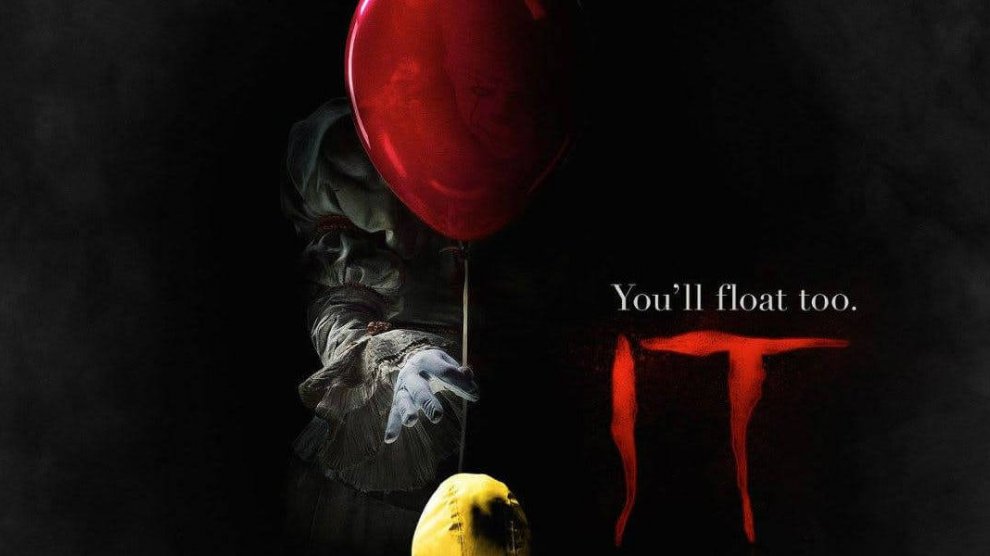
REVIEW: It


There were two main authors that influenced my youth.  For a long time it was the crazy worlds and adventures that Roald Dahl would create.  When I got a little bit older, I had my first true Stephen King moment.  It was grade seven, and a friend of mine at school told me about something that had been on television.  Thankfully he had recorded it, and I got to see the opening scene of the TV mini-series of It.  I already knew that horror was my thing, but what I had seen prior was instantly outclassed when I saw young Georgie interacting with Pennywise the Dancing Clown, who was talking to him from inside a storm drain.  The way the scene played out was both enticing and horrifying.  I was hooked.  Within a year I had read Pet Cemetery, Misery, and Cujo.  Eventually I took on the mammoth task of reading It, busting through its thousand pages as though they were nothing.  This book, like what I had seen in the intro of the mini-series, stood out.

In 2017 a theatrical version of the film came out, and I was torn.  I really wanted to see it, but this was a treasure from my youth, and I didn't want it to be ruined.  I think It was the exact same thing for many people.  The story is one that makes older people feel young, and gives young people a look at what time may bring about as they get older.  The big key for this movie, which is the first of two, is that it needed to nail the energy of the characters.

It is about a group of young boys and one girl who are self described losers that realize something horrendous happened in their small town every twenty seven years, and whatever caused this to happen began toying with each of them.  Adults in the town of Derry pay no attention to the tragedies, as though the entity is able to make them unable to put the pieces together.  The kids, who call themselves The Losers Club, decide that they need to stop this evil that manifests itself as a very creepy clown named Pennywise.

The glue of this story is being able to feel as though these children are real people and not just characters in a story.  Stephen King always made every person in his stories unique, and the script for the film (penned by Chase Palmer, Cary Joji Fukunaga and Gary Dauberman) does everything justice.  Our members of The Losers Club are all very individual, as though an entire story could be told through their own perspectives.  Each of them has their own fears, their own strengths, and hurdles.  The electric dialogue captures the way a number of young boys talk with laser precision.  The words flow, and their honesty makes The Losers Club come alive, giving us a strong emotional connection.

Viewing this film was a wonderful walk down memory lane, as each of the characters felt preserved from how I knew them from both the book and the mini-series.  There's stuttering Bill as the de-facto leader.  Beverly Marsh is brave and bold, coming from a horrible family life.  Eddie Kaspbrak is constantly terrified of getting sick because of his over protective mother.  And, always my favourite member of The Losers Club, Richie Tozier.  Whether we're talking about book, mini-series, or movie, Richie's antics are always entertaining.  Oh, and how could I forget the incredibly cruel Henry Bower, who has some complexity as a psychotic bully.  All of the characters in the movie, even if some aspects may have changed, felt just as they always had.

One aspect that I was really worried about with the film version was how Pennywise would be played.  The mini-series doesn't really stand up today, but I still love what Tim Curry did as Pennywise.  He was equal parts giggly and depraved, a combination that was haunting.  I will have to admit that on second viewing of It I do like how Bill Skarsgard envisions the clown.  It is very different, but still a very creepy performance.  There is a perverse nature, which meets up with immaturity, which meets up with sociopath.

The only thing that really ever took me out of the experience of It was some of the special effects.  Most of the time the digital work is beautiful and seamless, but a few times it was not as good.  I understand some of the shape shifting and trans morphing that Pennywise does needs digital effects, and those were all really good, but there were a few other moments when I became disconnected from the terror of the children.  It didn't happen often, but it did manage to cause a bump in the experience.  Please don't think that I'm saying that this is a poor aspect of the film.  I just felt like I should mention that a couple of times the effects didn't do it for me.  Just a few.  Don't hate me.  The rest of it looked great.

The point of this film isn't just to set up the showdown they will have with Pennywise in twenty seven years time.  It seems to serve as a message on how youth see the world differently than their parents.  I also believe that it will be part of a message on how we grow old, and what parts of us stay true to our childish nature.  That's just a guess, because I don't know what the second movie is going to focus on.  From what I remember, it is a theme of the book.

Like many of the horror classics I have written about this past week, there is a lot of good stuff attached to this film.  It's main strength as a book is that the stories of the young and old are told simultaneously.  It is understandable why both the mini-series and theatrical movie have decided to split into two parts to keep everything flowing for the medium of film.  Ultimately, I am sure the best way to view It will be next year when you can see the second part at the same time.  That's not meaning that I think you should wait.  Watch it now, and then watch it again next year.  Simple.

Based purely on quality reasons I could feel fine with calling It a modern horror classic.  It is scary, paced like a nightmare, and gives us complex characters, both good and bad.  When you add to that the fact that it went on to have the biggest opening weekend for a horror, and the second highest for an R-rated film, this is a movie that I don't will be forgotten by audiences any time soon.  People flocked to this movie like nothing else, and I do not believe they were disappointed.  I also think that for some younger viewers who may have snuck in, seeing Georgie and Pennywise will provide a new generation with a transformative experience.

Rating - 4 out of 4 stars

About Me

My photo
I'm smarter than a bat. I know this because I caught the little jerk bat that got in my apartment, before immediately and inadvertently bringing him back in. So maybe I'm not smarter than a bat.